

Hey, discoverers! Ready for another Moroccan adventure with us?
After exploring Marrakech, Fez and the Sahara, we continued our journey by train to Rabat, Morocco’s capital—a city we honestly knew very little about before arriving.
Some Moroccans we met along the way described Rabat as “boring,” but our experience was completely different. From the moment we started exploring, we found a calmer, more relaxed side of Morocco, where centuries of history blend naturally with wide avenues, elegant modern buildings, and everyday city life.
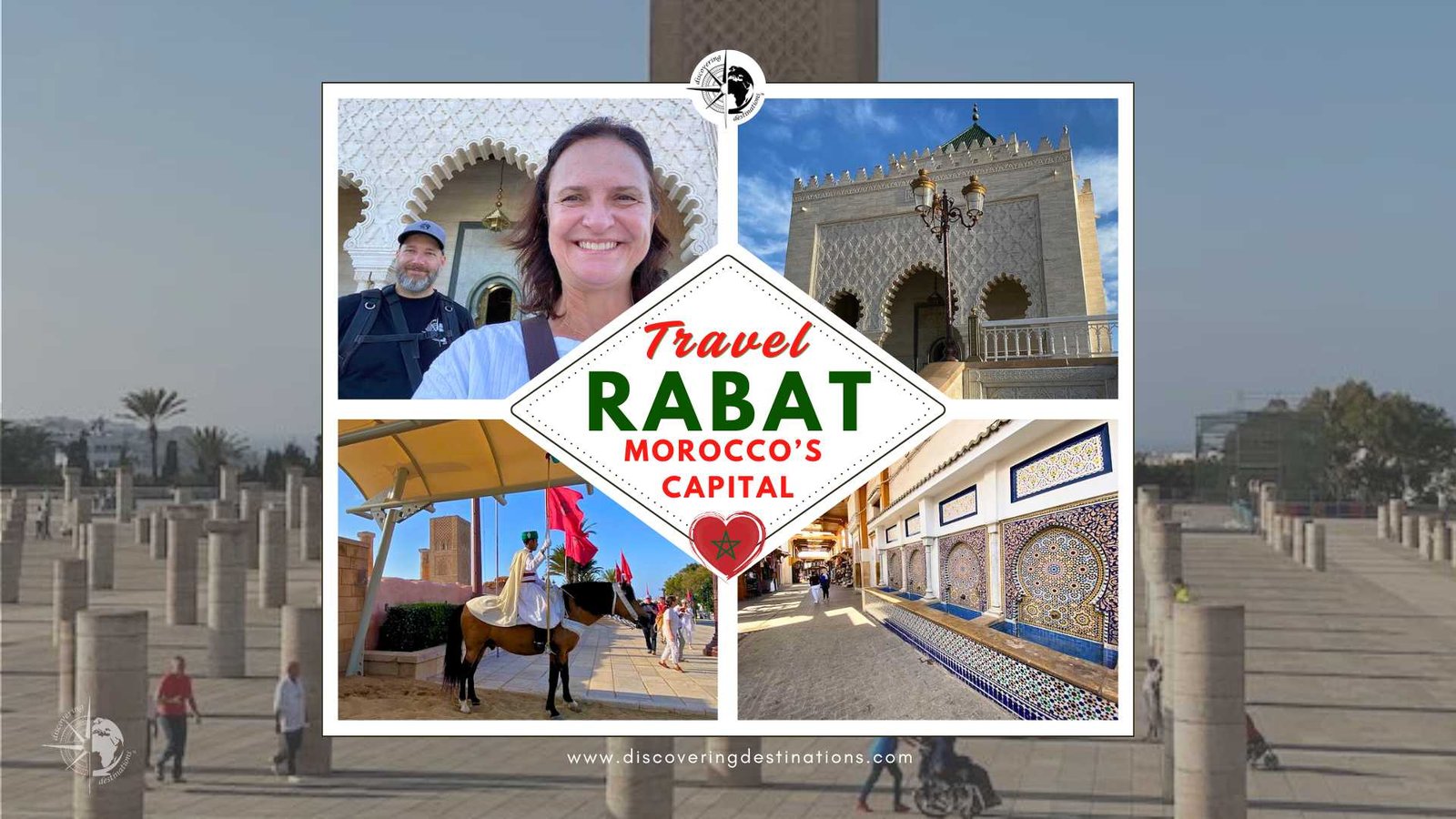
We spent an afternoon, an evening, and one full day in Rabat. In that time, we visited Hassan Tower and the Mausoleum of Mohammed V, walked through the Medina, and wandered the blue-and-white streets of the Kasbah of the Udayas.
What surprised us most was the contrast. Rabat feels historic without feeling frozen in time. Ancient walls, traditional architecture, and important monuments sit alongside newer neighbourhoods and more modern buildings, giving the capital a very different atmosphere from Marrakech or Fez.
Rabat may not receive as much attention as Morocco’s better-known cities, but it genuinely surprised us. So, is Morocco’s capital worth visiting? In this post, we’re sharing our honest experience, what we managed to see during our short stay, and a few practical tips for planning your own visit.
🎥 Prefer watching to reading? Watch our complete Rabat travel vlog on YouTube, where Serge shares our experience, the places we visited, and some of the fascinating history behind Morocco’s capital:
Watch our Rabat vlog on YouTube 👇🏻
This blog post pairs with the video and includes additional details, personal impressions, and practical tips for anyone considering a short visit to Rabat.
DISCLOSURE NOTE: Our Blog Post contain few affiliate links to products We personally use, trust, and suggest. These help support our efforts in creating valuable and informative content.
When you make a purchase or engage with our affiliate partners through these links, we may earn a small commission at no extra cost to you. Your support enables us to continue producing quality content and exploring new topics. Thank you for being a part of our journey and helping us grow! Sharing is caring ! Click here to learn more.
Getting from Fez to Rabat: What We’d Do Differently
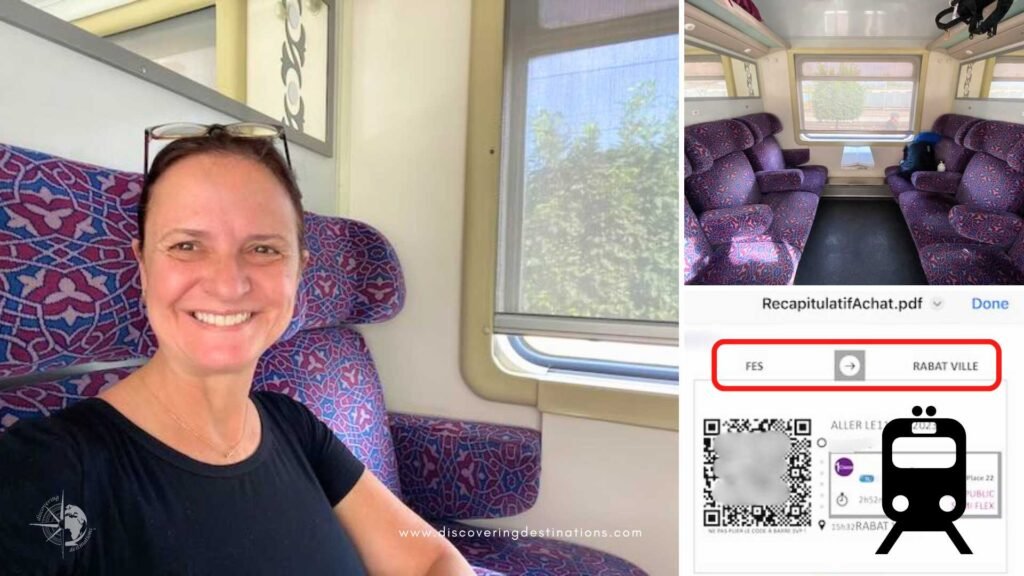
If you watched our Marrakech and Fez videos, you may already know that our riad check-in in Fez wasn’t exactly smooth. Unfortunately, there was one final surprise when it was time to leave.
At check-out, we were charged more for the local tourist tax than the amount shown on the riad’s own website. Accommodation taxes are generally collected directly by hotels and riads, but the amount may vary depending on the property and location.
Our tip: ask your riad or hotel to confirm the exact tourist tax at check-in—not check-out—and check whether it is already included in your reservation. This can help you avoid unexpected charges when it is time to leave.
From the riad, we headed toward Fez’s famous Blue Gate to find transportation to the train station. A man approached us, offered to help with our luggage, and arranged the ride. He appeared familiar with the area, so we accepted his help, although we were never completely certain whether he was an officially licensed driver.
Everything worked out, and we arrived safely at the station. Still, next time, we would probably ask our accommodation to arrange a trusted taxi or transfer in advance, especially when travelling with luggage.
Once we reached the Fez train station, the rest of the journey was refreshingly easy. Our train ride to Rabat took approximately three hours and was comfortable, reasonably priced, and a welcome break from negotiating transportation.
Extra Tip: We stayed connected in Rabat with our Holafly eSIM — no local SIM card hunting needed.

Where We Bought Our Train Tickets
We purchased our tickets directly through ONCF Voyages, the official online booking platform of Morocco’s national railway company.
At the time of our trip, we looked for other reliable booking platforms, including options that we could potentially recommend as affiliates. However, we did not find an alternative that felt as straightforward or trustworthy as booking directly with ONCF.
The process was simple: we selected Fès as our departure station and Rabat Ville as our destination. After completing the purchase, we received digital tickets that we could keep on our phones.
Our tip: book directly through the official ONCF Voyages website or its mobile app. You can use the platform to check schedules, compare available fares, choose your travel class, and purchase your ticket online. ONCF also recommends planning ahead to access better availability and fares.
Click here to check for Train Ticket & Prices: ONCF Voyages Website
Note: This is not an affiliate link.
A Few Practical Train Tips
- Check the schedule and purchase your tickets in advance when possible, particularly on popular routes or busy travel days.
- Arrive at the station with enough time to locate your platform. ONCF recommends being at the platform at least 10 minutes before departure.
- Keep your tickets accessible, as they may be checked during the journey.
- Don’t be afraid to speak with fellow passengers. We met a friendly Moroccan traveller who was heading to Rabat to visit his parents. When we arrived, he walked with us through Rabat Ville station and helped us get our bearings—a small act of kindness we really appreciated.
Looking for Another Way to Reach Rabat?
Although we travelled from Fez to Rabat by train, you may prefer taking the bus. Busbud lets you compare available routes, departure times, and prices for journeys such as Fez to Rabat or Marrakech to Rabat.
🚌 Click here to start to compare bus tickets to Rabat with Busbud
We may earn a small commission from bookings made through this link, at no extra cost to you.

Arriving at Rabat Ville Station: A Small Challenge and an Unexpected Kindness
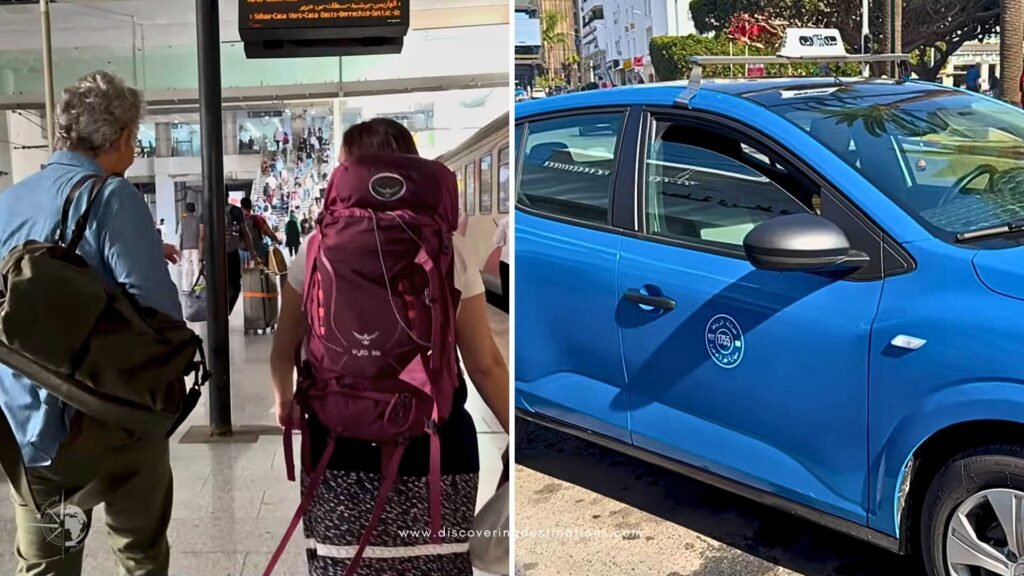
Arriving at Rabat Ville station was a little challenging during our visit in 2023.
Part of the station was under construction, the escalators were not working, and our platform was below street level. With our luggage in tow, it was not immediately clear which direction we needed to follow to reach the exit.
As we showed in our vlog, the route appeared to involve crossing over the railway tracks to reach another part of the station. Since the signs were unclear and we were unfamiliar with the layout, we felt unsure about where we were supposed to go.
Of course, this was our experience in 2023. The construction may now be complete, and the station layout or access routes may have changed since then.
A Local Stepped In to Help

That was when a local man noticed that we were struggling and offered to help with Eli’s suitcase. We did not fully understand what he said at first, but he clearly knew where to go.
He guided us safely through the station, showed us the elevator, and walked with us all the way to the taxi stand.
We thanked him and gave him a tip for his help. Without him, it probably would have taken us much longer to find the correct exit.
It was one of those small and unexpected acts of kindness that can immediately shape your first impression of a new city.
The taxi ride to our accommodation was also one of the most affordable of our Morocco trip, partly because we were staying close to the station.
After several nights in traditional riads, having a spacious and private apartment felt like a refreshing change of pace.

Where We Stayed in Rabat, Morocco
For our stay in Rabat, we chose a spacious apartment in the Hassan neighbourhood, close to some of the capital’s main landmarks. After several nights in traditional riads, it gave us a more modern, practical, and relaxing base for exploring the city.
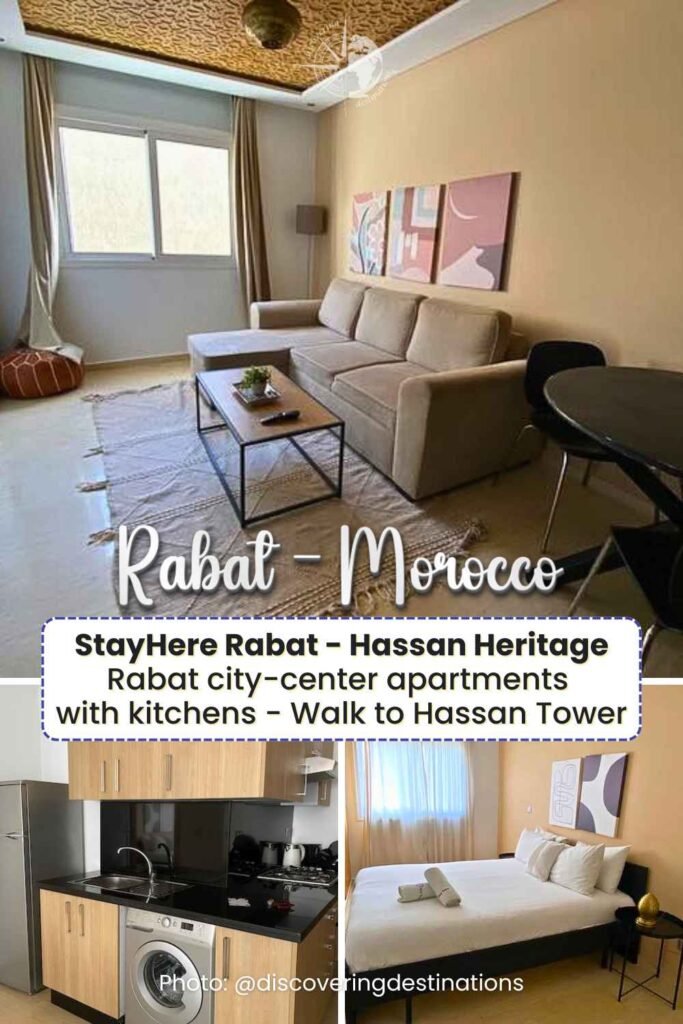
StayHere Rabat – Hassan Heritage
Best for: city-center stay, more space, walkable location, and easy access to Hassan Tower
During our stay in Rabat, we chose StayHere Rabat – Hassan Heritage. After several nights in traditional riads, the spacious apartment, kitchen, and living area felt like a refreshing change.
Its central location was another big advantage. We could walk to Hassan Tower and the Mausoleum of Mohammed V, while still having easy access to the medina and other parts of the city.
We recommend it for travellers who prefer a private apartment-style stay, extra space, and a practical base near Rabat’s main sights.
How We Compare Hotel Prices

When we book hotels, we usually start with Hotels.com. We have used its rewards program for years and like keeping many of our reservations in one place.
However, we never book without comparing first.
Prices, cancellation policies, taxes, breakfast options, and room availability can vary between platforms. Travel dates can also make a big difference.
For Rabat, we recommend checking both Hotels.com and Booking.com before choosing your stay.
Sometimes the same riad or hotel costs less on one platform. Another platform may offer better cancellation terms, payment options, or extras.
Our tip is simple: once you find a property you like, open it on both websites.
Compare the final price, cancellation policy, payment conditions, and everything included before booking.
Our First Afternoon in Rabat: The Mausoleum of Mohammed V and Hassan Tower
With only a few hours left in the day, we headed out to explore two of Rabat’s most important landmarks: the Mausoleum of Mohammed V and Hassan Tower.
Located side by side, they made an easy first stop and gave us an impressive introduction to the history, architecture, and atmosphere of Morocco’s capital.
The Mausoleum of Mohammed V – Rabat, Morocco
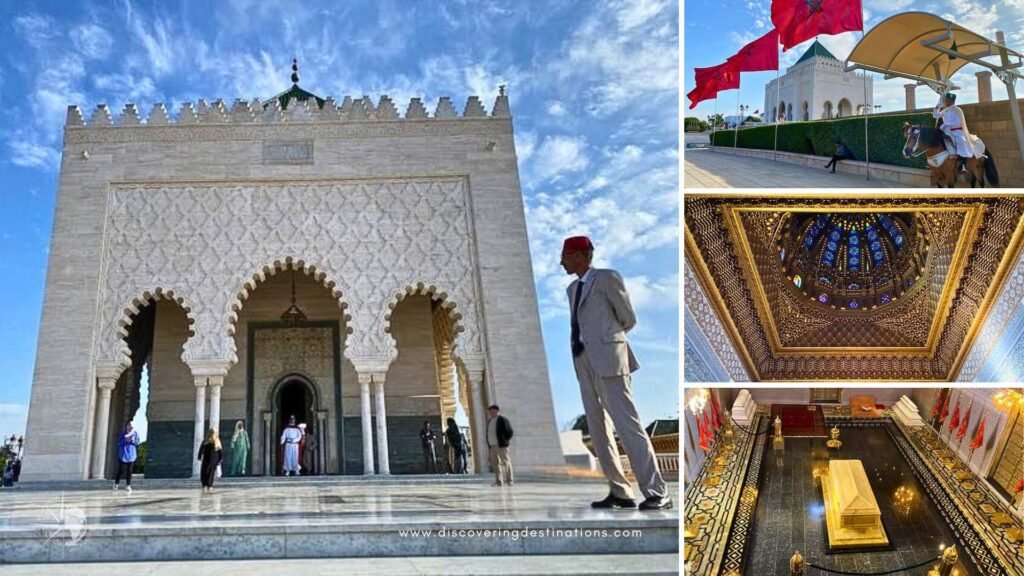
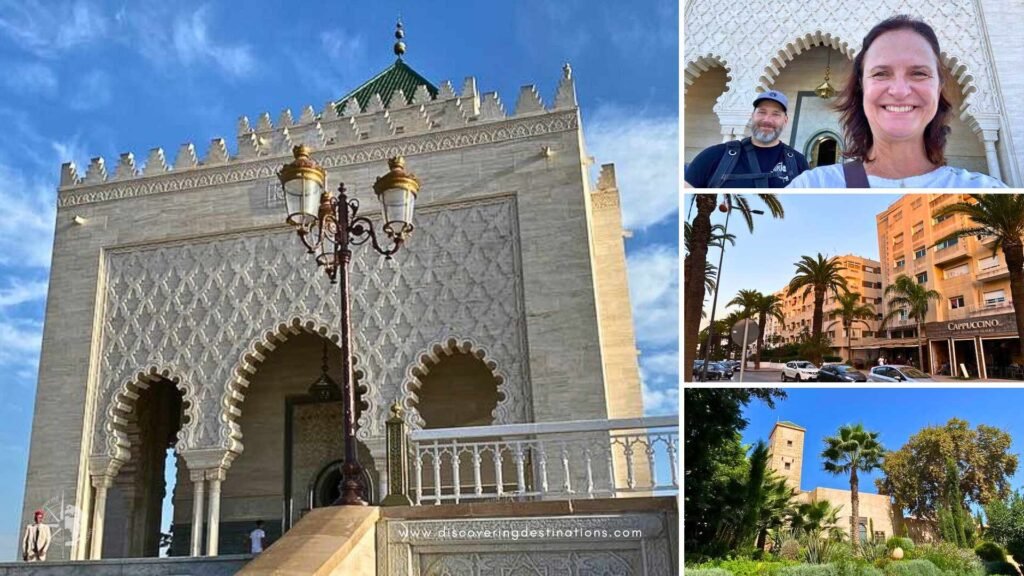
The Mausoleum of Mohammed V is the royal tomb of King Mohammed V, a central figure in Morocco’s independence from French and Spanish colonial rule. He is buried here alongside his sons, including King Hassan II, who ruled Morocco for almost four decades.
Built between 1961 and 1971, the mausoleum features white Carrara marble, carved cedarwood, intricate zellige tilework, and a striking green-tiled roof inspired by traditional Moroccan architecture.
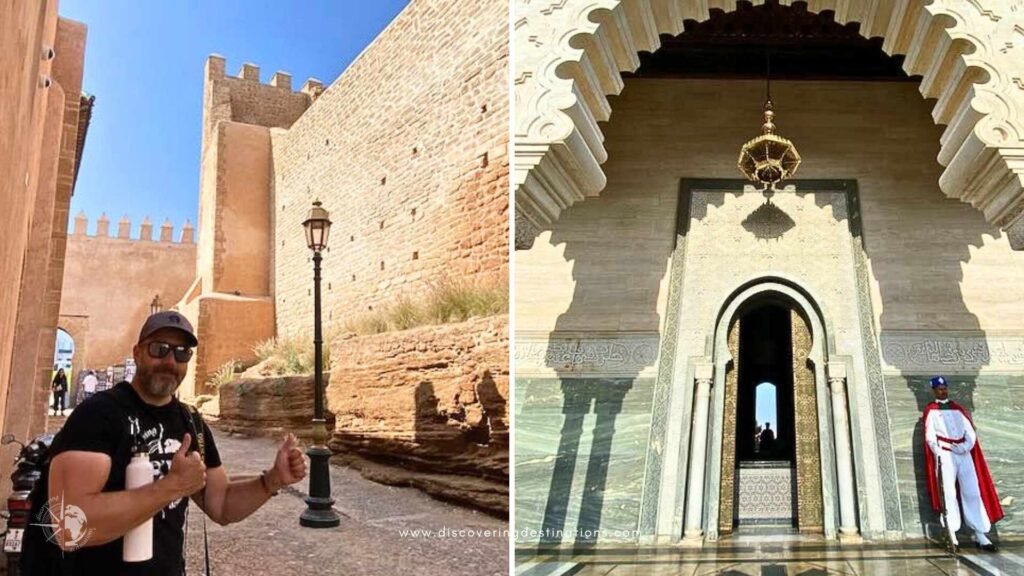
From the outside, the building looks elegant and impressive. Once we stepped inside, however, the atmosphere changed completely. The rich colours, detailed craftsmanship, quiet interior, and guards standing watch in traditional uniforms made the visit feel less like entering a tomb and more like stepping into an important piece of Moroccan history.
Good to know: Entry was free during our visit. Opening hours may vary, so check the current schedule before going.
Hassan Tower (Tour Hassan) – Rabat, Morocco
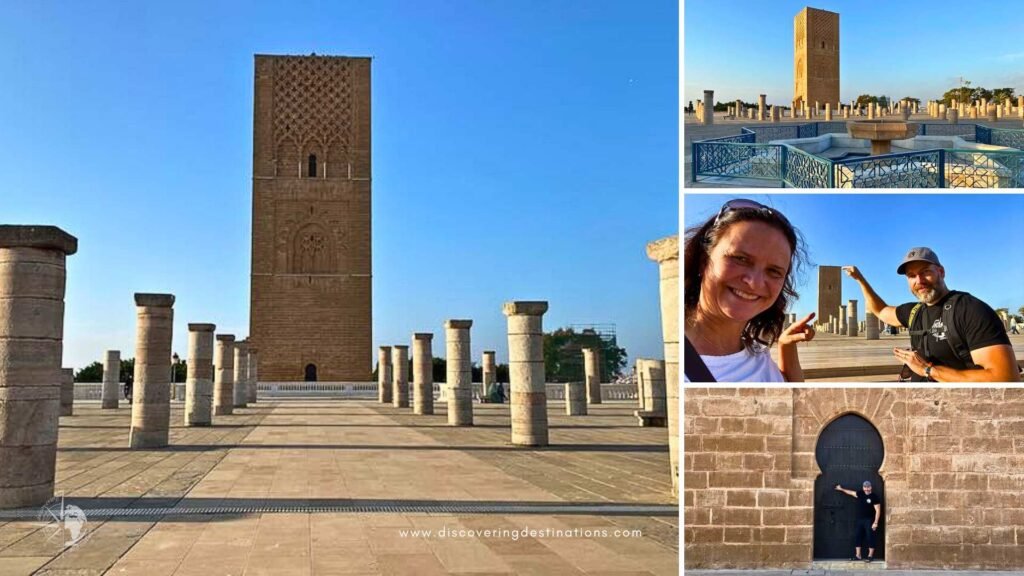
Right next door stands Hassan Tower, part of an ambitious mosque complex that was never completed.
Construction began around 1184 during the reign of the Almohad ruler Yaqub al-Mansur. The mosque was intended to become one of the largest in the world, but construction stopped after the ruler’s death in 1199 and was never completed.
Today, visitors can walk among rows of unfinished sandstone columns while the tower rises above the site as a reminder of the scale of the original project.
Walking between the columns created a striking visual rhythm. As our perspective shifted, the unfinished site felt both monumental and strangely timeless. It was a quiet place, but one that stayed with us long after we left.
Together, Hassan Tower and the Mausoleum of Mohammed V form part of Rabat’s UNESCO World Heritage designation, officially recognized in 2012 as “Rabat, Modern Capital and Historic City: a Shared Heritage.”
The designation highlights the unusual way Rabat brings together historic Almohad landmarks and the wide avenues and planned neighbourhoods developed during the French Protectorate.
Dinner at Sufra Restaurant and an Unexpected Irish Pub – Rabat, Morocco
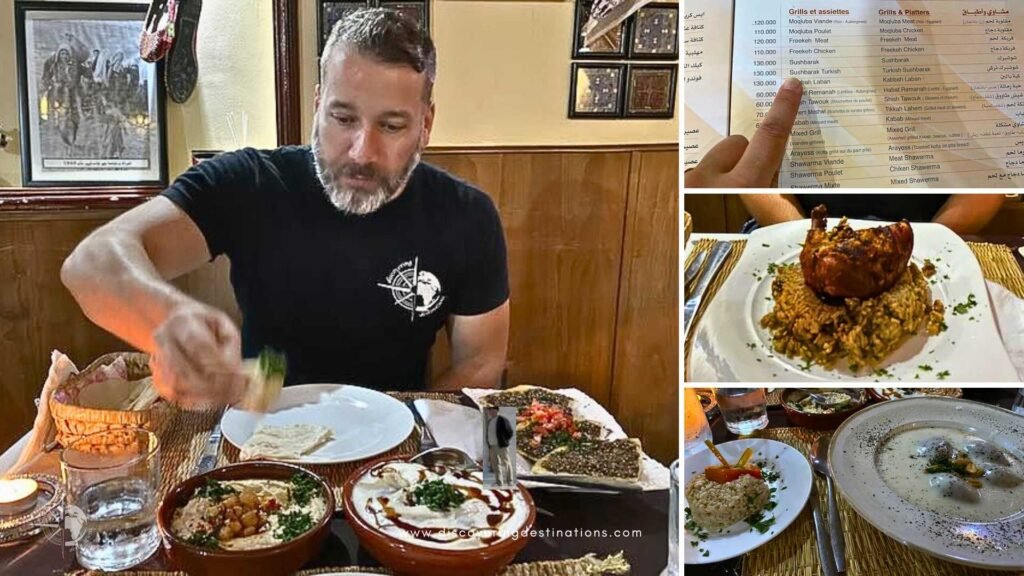
After nearly ten days of tagine and couscous, we were ready for something a little different.
For dinner, we went to Sufra Restaurant in Rabat, a Middle Eastern restaurant serving dishes such as mixed grills, shawarma, shish tawouk, freekeh, and kibbeh-style specialties.
The restaurant had a warm, traditional interior, with old photographs, decorative plates, Moroccan details, and even a vintage telephone displayed on the wall. It felt relaxed and welcoming, and the menu gave us a nice change from the Moroccan dishes we had been eating throughout the trip.
We ordered one of the restaurant’s Middle Eastern specialties, although we no longer remember the exact name of the dish. What we do remember is that it was comforting, flavourful, and exactly the kind of change we were looking for that evening.
An Irish Pub in Rabat?

After dinner, we started walking back toward our apartment. Along the way, we unexpectedly spotted an Irish pub—complete with a Guinness sign.
Finding an Irish pub in Morocco’s capital was definitely not something we expected.
A quick note about alcohol in Morocco: the country is predominantly Muslim, and alcohol is not part of everyday life for many Moroccans. However, licensed hotels, restaurants, and bars may serve it. Visitors should avoid drinking in public and always respect local customs and regulations.
We decided to stop for a cold beer and watch a little soccer on television. After several busy days of travelling, it was a simple and familiar moment that genuinely made us feel like we were on vacation.
🎥 You can see this part of our evening in the vlog at around 10:08, our supper and when we discovered the Irish pub in Rabat.
Our Full Day in Rabat: Exploring the Medina and Kasbah of the Udayas
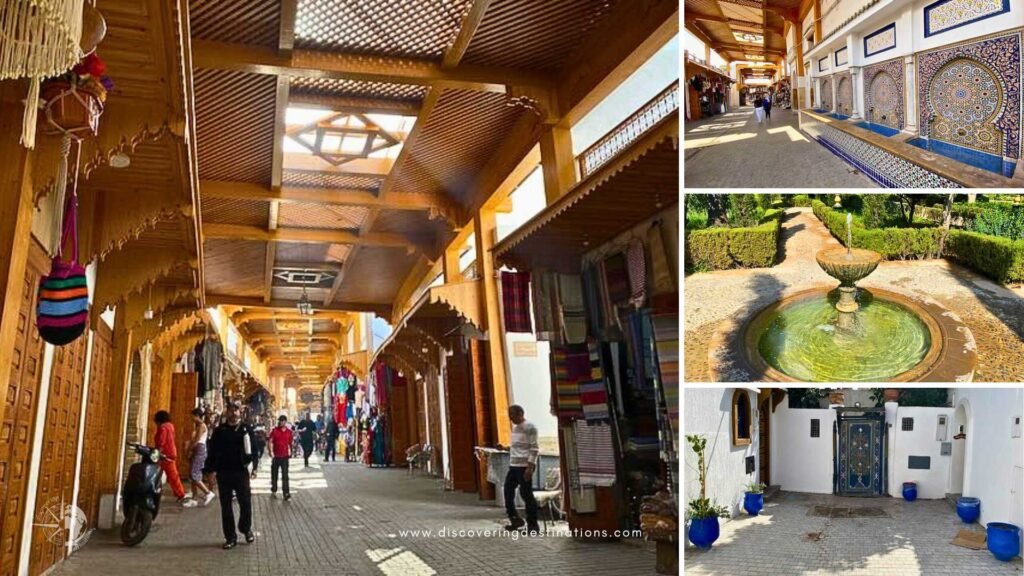
The following morning, we started with breakfast at a nearby café before walking along one of Rabat’s main avenues toward the medina.
Rabat’s medina is noticeably smaller than the ones we explored in Marrakech and Fez. However, that was part of its charm.
It felt calmer, cleaner, and easier to appreciate without the same level of crowds and activity. There were fewer motorbikes weaving through the narrow streets, and most people appeared to be locals simply going about their day.
To us, it felt more lived-in and less focused on tourism.
Rabat’s medina – Pay Attention to the Details
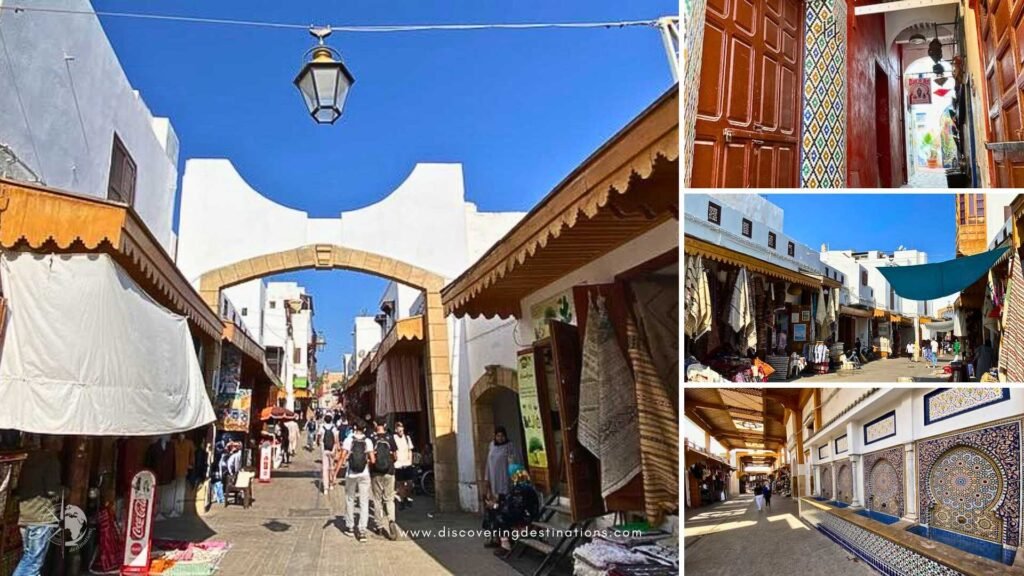
Rabat’s medina may not feel as dramatic as the medinas of Marrakech or Fez at first glance. The real beauty is in the smaller details.
As we walked, we noticed colourful doors, decorative arches, carved wood, painted walls, traditional lamps, local shops, and little pieces of street art hidden between the buildings.
One wall even featured a poem painted against a bright yellow background. These unexpected details made us slow down and pay more attention to our surroundings.
The shopping areas also felt more relaxed. We passed shops selling rugs, fabrics, clothing, household items, and local products, but we never felt pressured to buy anything.
The medina was still a maze, of course. Even with Google Maps, we sometimes struggled to understand which direction would lead us toward the waterfront.
Still, getting slightly lost turned out to be one of the best parts of the day.
From the Medina to the Andalusian Gardens – Rabat, Morocco
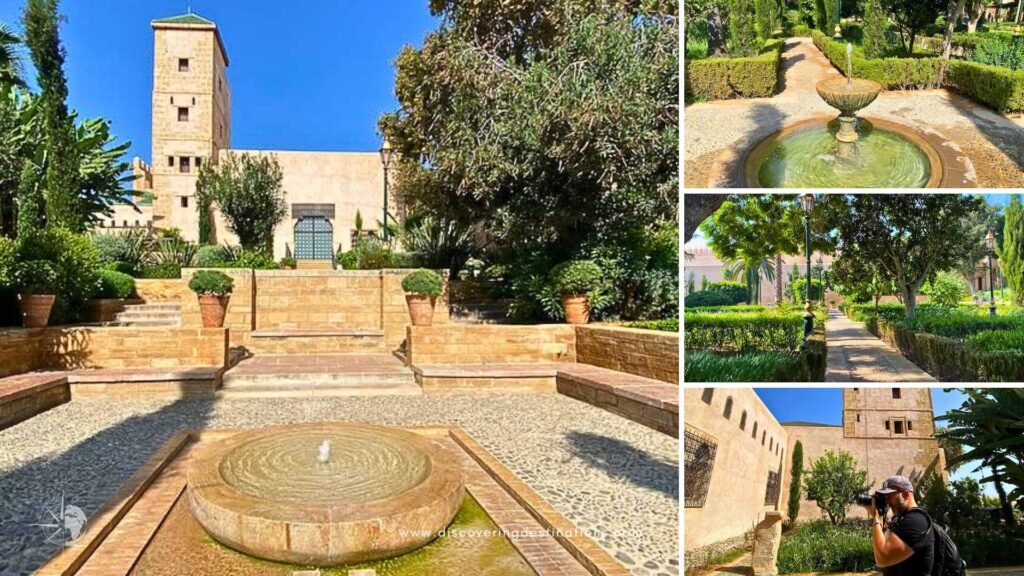
After crossing through the medina, we unexpectedly arrived at the Andalusian Gardens, located beside the Kasbah of the Udayas.
We had not planned the route perfectly, so discovering this green oasis on the other side felt like a lovely surprise.
The gardens were peaceful and beautifully maintained, with palm trees, flowers, decorative fountains, shaded paths, and intricate Moroccan tilework.
Best of all, entrance was free during our visit.
After walking through the busy streets in the heat, stepping into the gardens felt like entering a completely different world. It was cooler, quieter, and filled with birdsong.
For a few moments, we forgot that we were still in the middle of Morocco’s capital.
The Kasbah of the Udayas – Rabat, Morocco
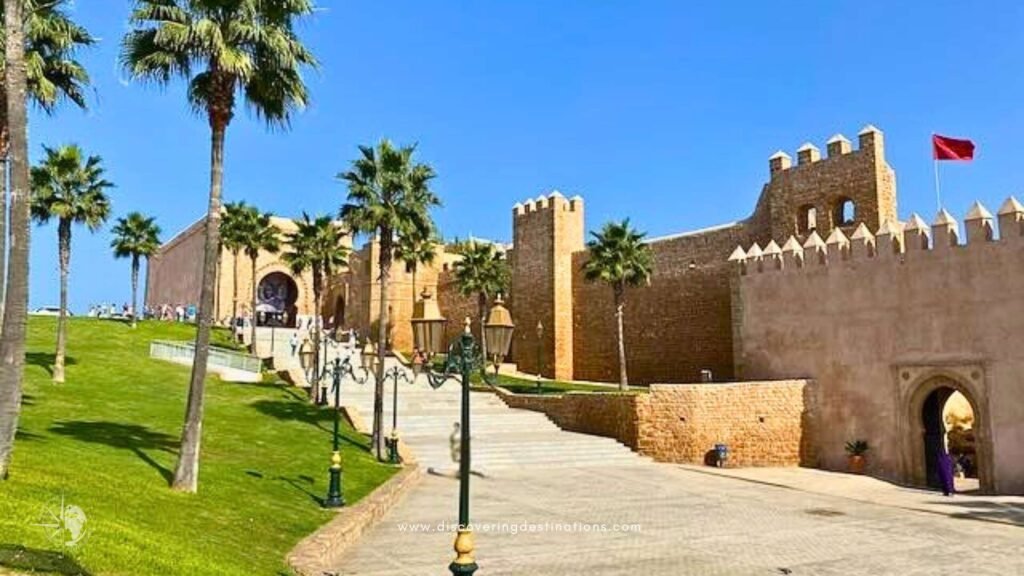
From the Andalusian Gardens, we continued into the Kasbah of the Udayas, although we did not immediately realize that the beautiful white-and-blue neighbourhood ahead was part of the same historic site.
The Kasbah is a fortified district overlooking the mouth of the Bou Regreg River, where it meets the Atlantic Ocean. It forms part of Rabat’s UNESCO World Heritage Site, officially recognized in 2012 as “Rabat, Modern Capital and Historic City: a Shared Heritage.”
Rather than being one individual monument, the Kasbah is an entire historic neighbourhood enclosed within old defensive walls. It includes monumental gates, residential lanes, viewpoints, and the blue-and-white streets that became one of our favourite discoveries in Rabat.
A White-and-Blue Neighbourhood Inside the Kasbah – Rabat, Morocco
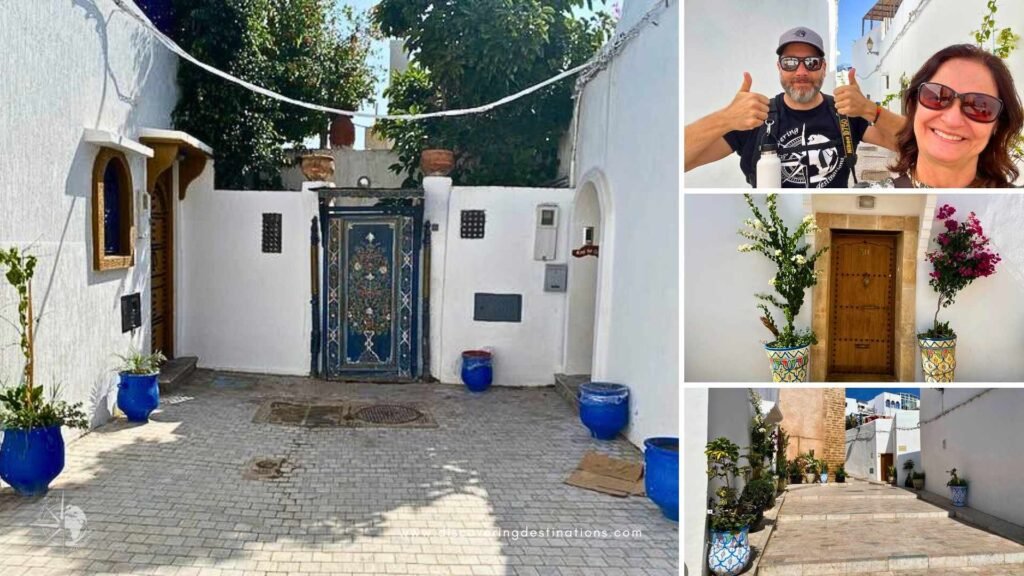
Once inside, the atmosphere changed completely.
The Kasbah felt less like a formal historical attraction and more like a peaceful little village hidden within Morocco’s capital. We wandered through narrow lanes surrounded by whitewashed homes, blue-painted walls, colourful doors, stone details, hanging lamps, plants, and quiet residential corners.
It was one of the most unexpected and beautiful areas we discovered in Rabat.
Many travellers compare these blue-and-white streets to Chefchaouen. Since we had not visited Chefchaouen, the neighbourhood reminded us of places we later explored in Europe—especially the whitewashed streets of Ostuni in Italy and some of the villages we visited in Greece, including Santorini.
Of course, each destination has its own history and identity. Still, the combination of white walls, blue details, narrow lanes, and the intense blue sky created a similar Mediterranean feeling.
Finding that peaceful atmosphere inside a historic fortified district in the middle of Rabat was a wonderful surprise.
Source: UNESCO World Heritage Centre – Rabat, Modern Capital and Historic City: a Shared Heritage
Views over the River and Coastline – Rabat, Morocco
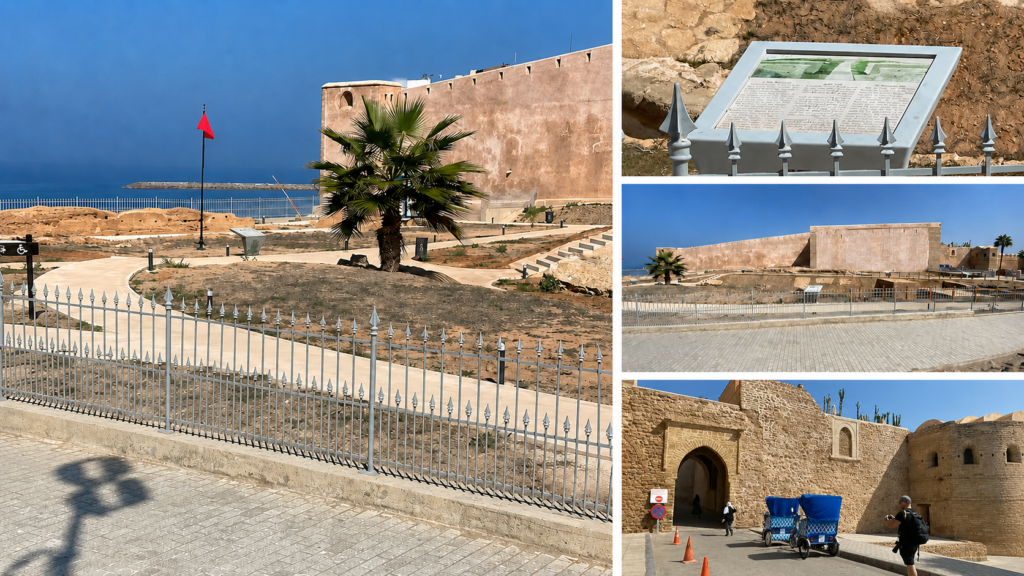
As we continued toward the upper areas of the Kasbah, the narrow streets eventually opened toward panoramic viewpoints.
From there, we could look across the Bou Regreg River, the coastline, and parts of the city below.
The views gave us a better sense of Rabat’s location between the river and the Atlantic Ocean. They also showed another side of the capital—one that feels both historic and connected to the sea.
When It Was Time to Stop
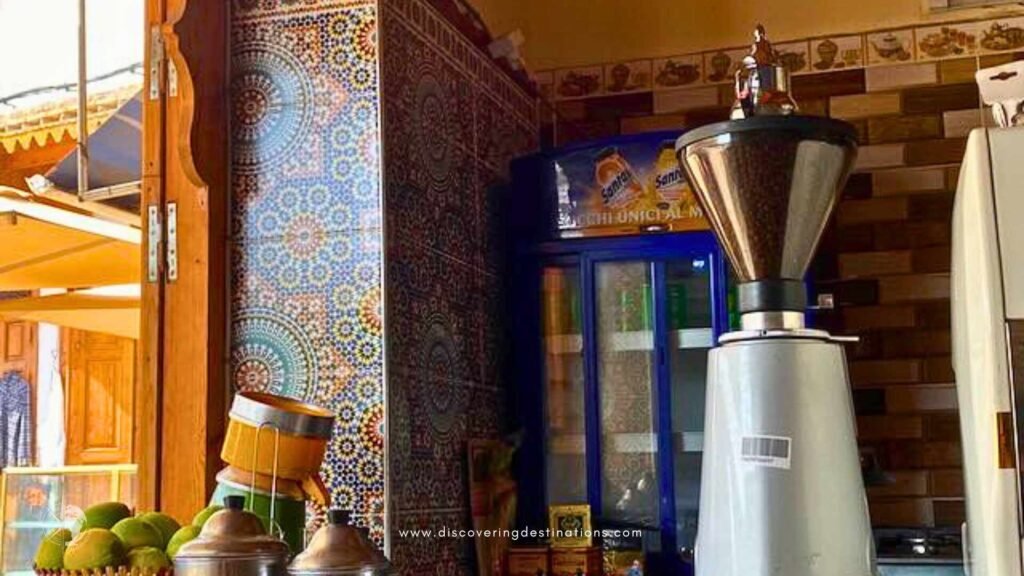
We had originally hoped to continue farther toward the waterfront and spend more time exploring Rabat’s coastal side. From the Kasbah area, we could already see that there was much more to discover, from the riverfront to the Atlantic-facing edges of the city.
However, after several hours of walking in the heat, we were completely exhausted and knew it was time to slow down.
The only thing we still had enough energy to do was return to the medina and find somewhere to sit. We stopped for a cold drink and a coffee, and we were also grateful to find a restroom before making our way back to our apartment to recharge.
It was a simple stop, but at that moment it was exactly what we needed.
Our vlog does not show us rushing from one attraction to the next just to check off a list. Instead, it shows what really happened: we explored at our own pace, enjoyed the parts of Rabat that surprised us most, and then decided to rest.
And honestly, that felt right.
Travel does not always have to be about “seeing everything.” Sometimes, the best memories come from wandering without a perfect plan, noticing small details in a medina, finding a peaceful garden, or unexpectedly ending up in a beautiful white-and-blue neighbourhood you had not planned to visit.
Even so, Rabat definitely left us with a short list of places we would love to save for next time.
What We’d Explore Next Time in Rabat
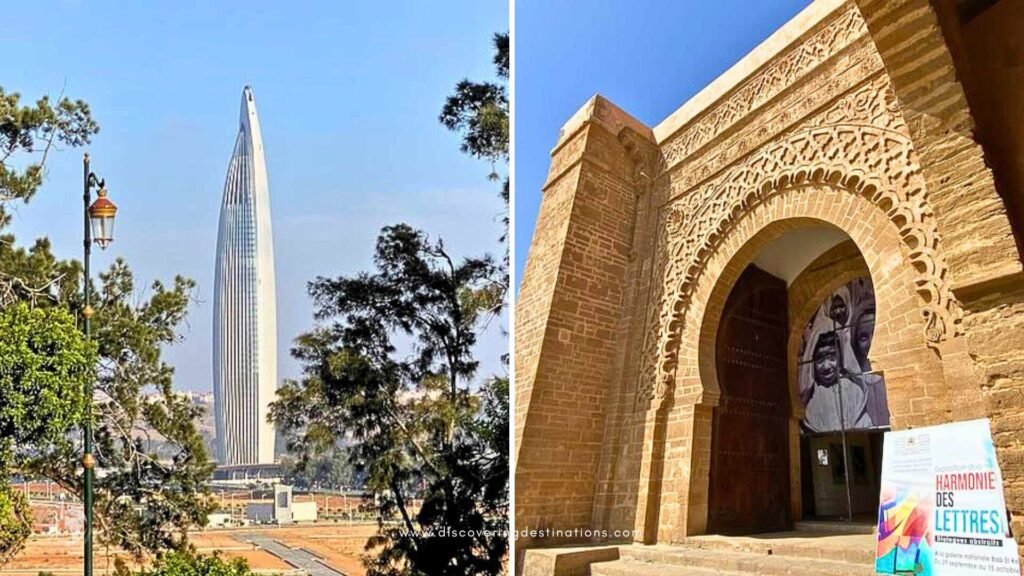
If you have more time than we did, here are a few places we would consider adding to your Rabat itinerary:
More Historic and Coastal Places
- The waterfront and coastline – We would love to walk farther along the riverfront and coastal areas. The views over the Bou Regreg River and the Atlantic looked beautiful.
- The National Museum of Jewelry, near the Kasbah entrance – We spotted this 17th-century former palace from the outside but didn’t have the time or energy to go in. It’s apparently home to jewelry pieces dating back over 100,000 years, so it’s high on our list for next time
- Café des Oudayas (formerly Café Maure) – A classic stop near the Kasbah, especially if you want tea with a view.
- Chellah – This one stings a bit: we didn’t find out about Chellah until after we’d already left Rabat. Layers of Roman ruins, a Merinid necropolis, and gardens known for their birdlife — it’s the kind of historic site we’d happily spend a slow afternoon in. Next time, it’s non-negotiable.
If Chellah makes your list, you can [grab entry tickets here] instead of guessing at opening hours on-site.
Modern Rabat and Nearby Salé
- Mohammed VI Tower – We saw this striking skyscraper from a distance in 2023. At that time, it was still under construction. The tower now stands out on the Rabat–Salé skyline. Next time, we would love to see it up close. We would also check whether visitors can access a panoramic area. Its modern design reflects what surprised us most about Rabat. The city combines centuries-old landmarks with bold new architecture.
- More time in the Kasbah and medina – Both areas were filled with colourful doors, quiet corners, historic details, and great photography spots. We could easily spend several more hours exploring them.
- A visit across the river to Salé – Salé sits just across the Bou Regreg, and the crossing itself is refreshingly simple — a short boat taxi or a walk over the Mohammed VI Bridge. If we wanted to make it part of the experience rather than just a way to get there, a private boat tour along the river would be a scenic way to see the Kasbah, Hassan Tower, and the new Mohammed VI Tower from the water before landing in Salé.
Our time in Rabat ended earlier than planned. However, what we saw was enough to make us want to return.
Even a short visit showed us that we had only scratched the surface of Morocco’s capital.
How Much Time Do You Need in Rabat, Morocco?
We spent an afternoon, an evening, and one full day in Rabat.
That was enough time to visit several of the city’s main landmarks, explore part of the medina, walk through the Andalusian Gardens, and discover the Kasbah of the Udayas. It also gave us a good first impression of Morocco’s capital.
Still, we did not have enough time—or energy—to experience everything Rabat has to offer.
With two full days, we would have liked to visit Chellah, spend more time along the waterfront and coastal areas, explore more of the medina, and possibly cross the Bou Regreg River to visit Salé.
We also would have liked to visit some of the museums and cultural sites we passed during our walk, rather than only seeing them from the outside.
Extra Tips
For travellers moving between Fez, Casablanca, and Marrakech, Rabat works well as a short stop. However, based on our experience, the city could easily fill two relaxed days without feeling rushed.
If you’re working with a single day, a private tuk tuk tour is a fun way to cover Rabat’s highlights — the Kasbah, Hassan Tower, the Mausoleum, and the Medina — without worrying about the walking distances between them.
Would We Go Back to Rabat?
Absolutely.
Even with only an afternoon, an evening, and one full day to explore, Rabat left a strong impression on us.
It felt quieter, calmer, and more lived-in than Marrakech or Fez. At the same time, we were inspired by the way Rabat combines a more modern capital-city atmosphere with historic landmarks, traditional neighbourhoods, and so many beautiful places still waiting to be discovered.
The contrast made the city especially interesting. Wide avenues and modern buildings sit alongside centuries-old walls, detailed architecture, peaceful gardens, and the blue-and-white streets of the Kasbah of the Udayas.
Rabat was also a very inspiring city for photography. Serge found plenty of details and contrasts to capture, from colourful doors and traditional tilework to fortress walls, coastal views, and everyday scenes inside the medina.
We certainly did not see everything. The heat slowed us down, and we chose to explore at a more relaxed pace rather than rush from one attraction to another.
Still, what we experienced was enough to convince us that Rabat deserves far more attention than it often receives.

A Few Things to Know Before Visiting Rabat
- Rabat felt calmer and more relaxed to us than Marrakech or Fez. However, visitors should still take the usual precautions they would in any large city.
- The capital combines historic Almohad landmarks with broad avenues and planned urban areas developed during the French Protectorate.
- Entry to the Mausoleum of Mohammed V was free during our visit. Check the current opening schedule before going.
- Trains connect Rabat with Fez, Casablanca, and Marrakech, making the city an easy addition to a wider Morocco itinerary.
- Pack comfortable shoes, modest clothing, sun protection, water from a trusted source, and pocket tissues for public restrooms.
- Take time to explore beyond the main tourist attractions. Walk through the streets, notice the architecture, and experience the everyday side of Rabat—not only its famous landmarks.
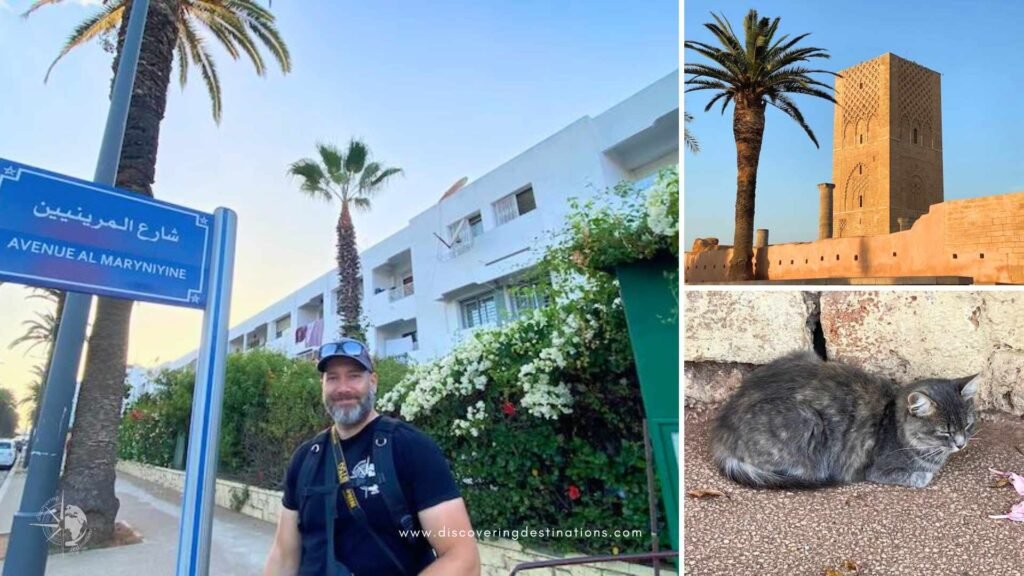
- Cats are everywhere in Rabat, especially around the medina and the Kasbah. They became some of Serge’s favourite photography subjects! However, don’t assume that a cat is homeless or that you can simply take it home. International adoption requires help from a local veterinarian or rescue, health documentation, airline approval, and compliance with your country’s animal-import rules.
Watch Our Rabat Vlog
Want to experience Morocco’s capital with us?
Watch our complete Rabat vlog on YouTube for footage from our train journey, the Mausoleum of Mohammed V, Hassan Tower, the medina, the Andalusian Gardens, and the Kasbah of the Udayas.
▶️ Watch our Rabat vlog here:
From Rabat, we returned to Marrakech—but this time, there was no more sightseeing on the schedule.
We were ready to slow down, rest, enjoy a well-earned massage, and reflect on our ten-day journey through Morocco.
Continue with our final Morocco adventure to see how we spent our last night in Marrakech and what we thought about the trip as a whole.
Safe travels, and see you in the next post!
Eli & Serge
Discovering Destinations

Eli & Serge from Discovering Destinations
Discovering Destinations: Travel Tools & Planning Tips
Traveling is exciting—but a well-planned trip can make the experience smoother and more affordable. We’ve learned through years of travel that starting early helps you find the best deals, avoid stress, and make the most of your time.
Use trusted tools to compare prices, read real traveler reviews, and book with confidence. From flights and hotels to eSIMs and local tours, these platforms have helped us—and now they can help you too.