


I (Eli from Discovering Destinations) was born and raised in São Bernardo do Campo, in Greater São Paulo. I left at 40 to live in Montreal, Canada, but I go back all the time — family, work, and the occasional excuse to eat at a padaria I’ve missed. My husband Serge is Canadian and has been coming to Brazil with me since 2010, and together we’ve traveled to more than 30 countries over the past 15+ years.
So this guide comes from two angles at once: mine, as someone who grew up in São Paulo and still calls it home, and Serge’s, as someone who walked into all of it as a foreigner and had to figure it out — sometimes with me translating, sometimes on his own.
This is the version of the conversation I’d actually have with a friend before their first trip to São Paulo. Not a textbook. Just what matters.
🎥 Want to see São Paulo before your trip? We’ve also shared our experiences around the city on YouTube — from local neighborhoods and attractions to food and everyday moments. Watch our São Paulo travel vlogs here.
DISCLOSURE NOTE: 👉 Our Blog Post contain few affiliate links to products We personally use, trust, and suggest. These help support our efforts in creating valuable and informative content.
When you make a purchase or engage with our affiliate partners through these links, we may earn a small commission at no extra cost to you. Your support enables us to continue producing quality content and exploring new topics. Thank you for being a part of our journey and helping us grow! Sharing is caring ! Click here to learn more.
São Paulo Is Bigger Than People Expect
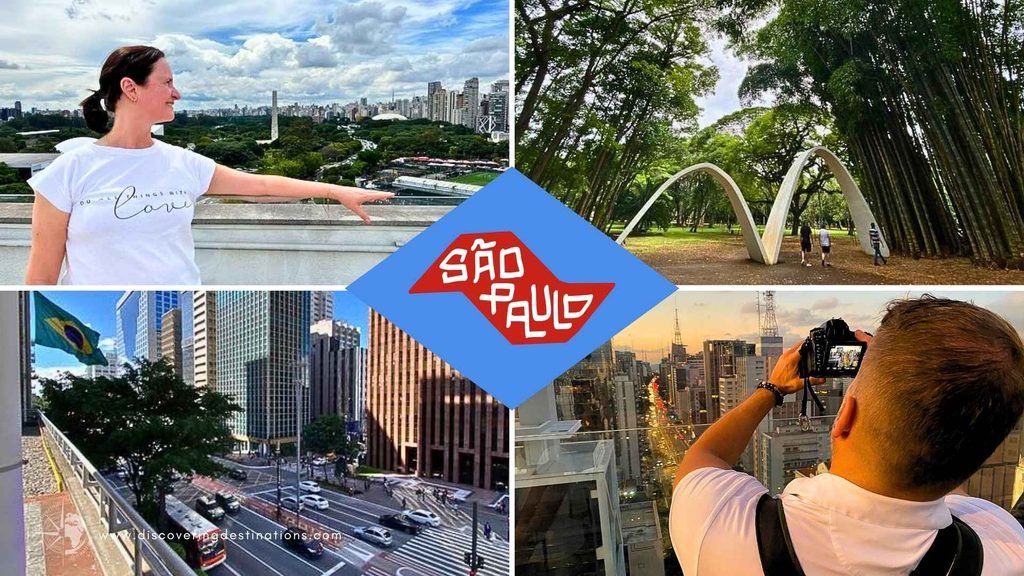
São Paulo isn’t really one city — it’s a huge metropolitan region of more than 20 million people, made up of neighborhoods and districts that each have their own atmosphere, restaurants, nightlife, attractions, and daily rhythm.
It doesn’t have one single center that you naturally orbit around, and that matters for one very practical reason: where you stay — and which areas you decide to explore — can shape your entire trip.
Traffic here is real, and a distance that looks short on a map can easily turn into 40 minutes or more by car, especially during rush hour.
Some areas first-time visitors often consider include:
- Jardins — Upscale and walkable. Very convenient for Avenida Paulista. A great base if you want to be close to museums, restaurants, and shops.
- Vila Madalena — Creative and colorful. Known for street art, bars, and a younger crowd. This is where you’ll find Beco do Batman, one of São Paulo’s most famous street-art spots. Want to explore it with a local guide? Check out Vila Madalena and Beco do Batman tours here.
- Pinheiros — Lively and varied, with an excellent food scene. Cafés, bars, and plenty of local energy.
- Itaim Bibi and Vila Olímpia — Modern and business-oriented. Lots of restaurants, bars, and nightlife. Good picks if you want a more contemporary side of São Paulo.
- Moema / Ibirapuera — Close to Ibirapuera Park, with museums and restaurants nearby. A slightly more residential feel. Want to explore the park with a guide? Check out Ibirapuera Park and cultural tours here.
💡 Eli’s Local Tip
If you only have a few days in São Paulo, I wouldn’t try to cover the whole city. Pick one or two areas that sit near each other and explore what’s nearby — you’ll spend far less time in traffic and far more time actually enjoying the city. A few combinations that work well:
For example:
- Avenida Paulista + Jardins
- Pinheiros + Vila Madalena
- Ibirapuera (Including Ibirapuera Park) + Moema
And if you have a little extra time, Liberdade is well worth adding for its food, shops, markets, and cultural atmosphere.
That way, you’ll spend much less time sitting in traffic and much more time actually enjoying São Paulo.
São Paulo Is Not All of Brazil
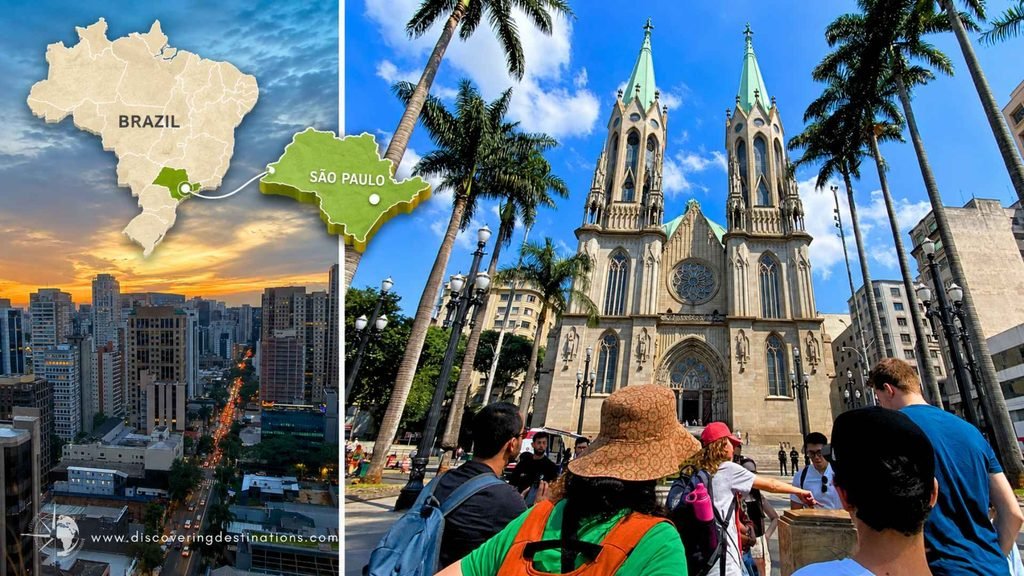
One of the biggest mistakes first-time visitors make is treating Brazil like a single experience. Brazil is closer to a continent than a country — 26 states plus a Federal District, with different climates, cultures, food, landscapes, and even different safety realities depending on where you go.
Visiting São Paulo and assuming you’ve “seen Brazil” is a bit like visiting New York and assuming the rest of the U.S. is the same. São Paulo is a major business and financial hub — fast, urban, in some ways more comparable to other big world cities than to the beach towns or colonial destinations people often picture when they think of Brazil. The Northeast has a completely different rhythm. The South has its own history and influences.
Even São Paulo State is far more than the capital. Beyond the city, you’ll find beaches along the coast, countryside towns, mountain escapes, coffee regions, and vineyards — places that feel nothing like the metropolis.
🇧🇷 Brazil Note: This regional variety exists throughout the country — food, accents, pace of life, and everyday habits shift noticeably from one region to another. Try not to generalize Brazil based on one destination, including this one.
If São Paulo is your only stop, that’s completely fine — the city stands on its own. Just know you’ve experienced one fascinating part of Brazil, not Brazil as a whole.
Portuguese, Not Spanish: What Visitors Should Know
Yes that’s right. Brazilians speak Portuguese, not Spanish, even though the country is surrounded by Spanish-speaking neighbors — Brazil was colonized by Portugal, and Portuguese has united the country ever since. It sounds obvious written down, but I’ve seen visitors try out Spanish phrases in São Paulo expecting them to land. They won’t, and Brazilians notice the difference right away.
As for English: São Paulo has more English speakers than most of Brazil, especially among younger people, in hotels, and in business settings. But don’t expect it everywhere — taxi drivers, small restaurant staff, and older generations often speak little to none.
Even though I’m Brazilian, I still end up translating for Serge fairly often — in local restaurants, markets, with taxi drivers. Over the years he’s picked up basic Portuguese phrases, and that alone changed how people responded to him. Effort goes a long way here.
A few phrases worth having ready:
| Portuguese | English |
|---|---|
| Olá / Oi | Hello / Hi |
| Bom dia / Boa tarde / Boa noite | Good morning / afternoon / evening |
| Por favor | Please |
| Obrigado / Obrigada | Thank you (said by a man / woman) |
| Com licença | Excuse me (to pass by or get attention) |
| Quanto custa? | How much does it cost? |
| A conta, por favor | The bill, please |
| Desculpa, não falo português | Sorry, I don’t speak Portuguese |
| Você fala inglês? | Do you speak English? |
| Pode me ajudar? | Can you help me? |
👉 Start learning Portuguese with Babbel.
That last one especially — saying it, even badly, tends to soften a conversation instead of shutting it down.
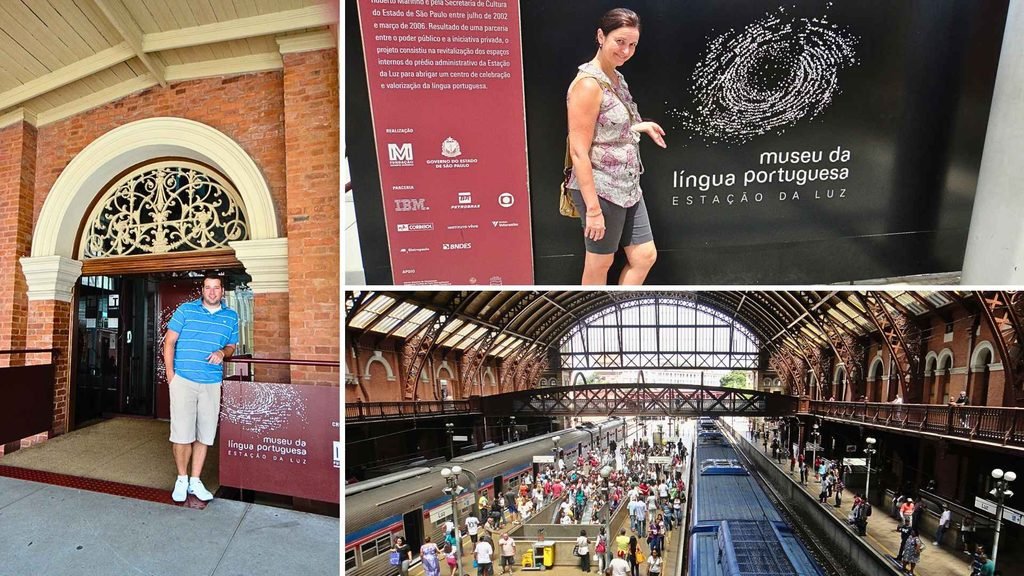
If you’re curious to learn more about the Portuguese language itself, São Paulo also has the Museu da Língua Portuguesa inside the beautiful Estação da Luz. It’s an interactive museum dedicated to the Portuguese language, and it’s a really interesting stop if you enjoy language, culture, and history.
🇧🇷 Brazil Note: Portuguese-only, with limited English outside tourist areas, holds true across most of Brazil, not just São Paulo.
Using Your Phone in São Paulo city
Get mobile data working before you land, not after. Google Maps becomes essential for navigating the city and calling Ubers reliably. Having it from the airport onward saves a lot of stress on a tired first day.
If you want data working the moment you touch down, an eSIM you activate before the flight — like Holafly or Airalo — makes this a lot simpler than hunting for a SIM card at the airport.
This isn’t just advice for first-timers, either. Even though we visit Brazil often, we still use an eSIM every trip. Getting a local SIM from Claro or Vivo means going into a store, waiting in line, and setting up a profile tied to a CPF — the Brazilian tax ID. As visitors, that’s not something we have, and it’s not worth the time even if we did. An eSIM skips all of it.
A few phone habits that can make things easier in São Paulo:
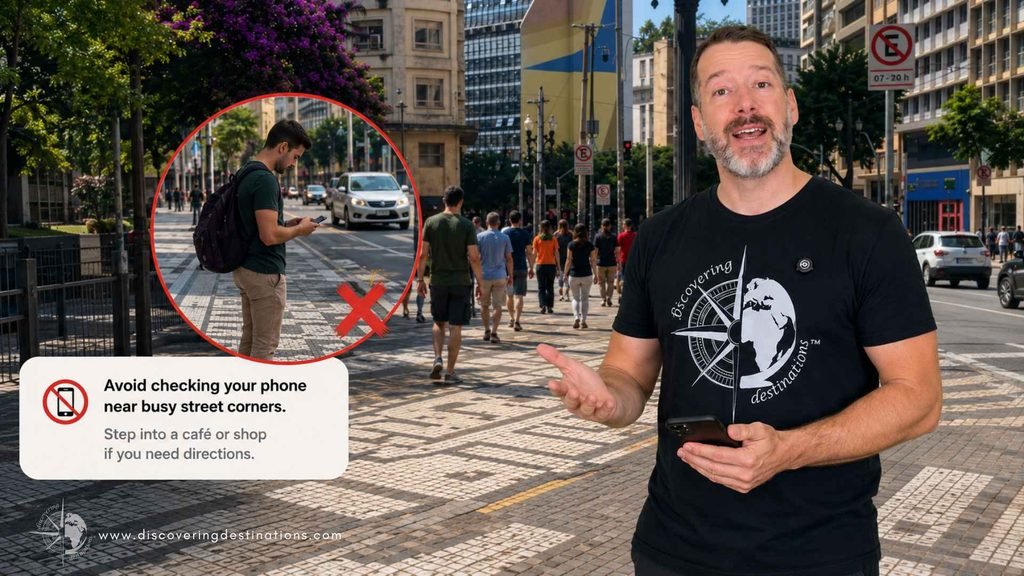
- If you need to check directions, step into a shop, café, or other indoor space rather than standing still on a busy sidewalk staring at your screen
- Be especially careful using your phone for photos in Downtown São Paulo, including while waiting at traffic lights or standing on busy street corners. This is something we learned from Serge’s own experience during our São Paulo Free Walking Tour
- Keep your phone in a zipped bag or secure front pocket in crowded areas rather than in a back pocket or loosely in your hand
- Avoid holding your phone close to the curb or next to an open car window in busy traffic
- Save offline maps as a backup, so you don’t always need your phone out while figuring out where to go
Just a reminder: None of this is about being scared of the city — it’s just what actually makes a day here easier.
📱 Need mobile data in São Paulo?
We’ve personally used both Airalo and Holafly on our travels, and having an eSIM ready before landing makes things much easier for Google Maps, Uber, WhatsApp, and translation apps.
👉 Compare Airalo and Holafly eSIM options for Brazil.
How to Stay Safe in São Paulo Without Stressing About It
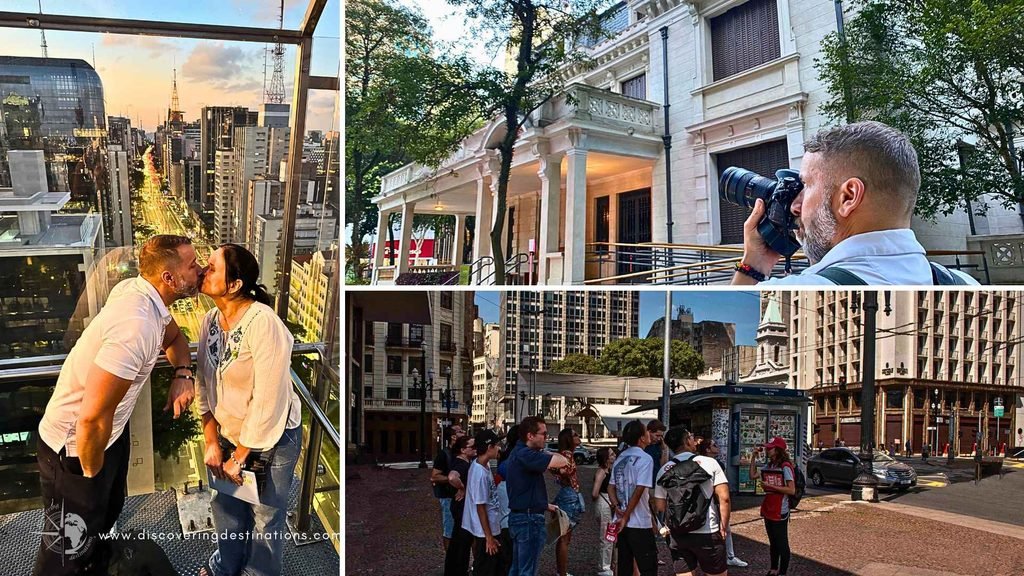
This is one of the questions we hear most often: is São Paulo safe?
The short answer is: yes, you can absolutely enjoy São Paulo — it just helps to stay aware of your surroundings, the same way you would in any large city.
A few simple habits can make your day feel much easier:
- Be a little more discreet with your phone in busy areas, as mentioned above
- When walking around, especially in Downtown São Paulo, it’s a good idea to keep things casual and leave expensive watches, jewelry, or other valuables somewhere secure.
- Keep cameras and valuables secure when you’re not using them
- Avoid keeping your passport, main documents, and all your money or credit cards in an easy-to-access backpack pocket. A money belt or another secure option can be useful for important items
- A cross-body bag can be more practical in crowded places
- When using Uber, take advantage of the available safety features, such as the ride verification PIN/code, especially at night

Serge is a photographer, so we’re naturally more conscious about when and where we use professional camera gear. In busier areas, we sometimes plan our route in advance or join a guided walking tour so we can focus more on enjoying the experience and less on navigating.
There have also been moments when I noticed someone paying a little more attention to us while Serge was busy filming. Nothing happened — we simply moved along and continued our day.
That’s really the mindset I recommend: stay aware, but don’t let safety worries take over your trip. If a street or situation doesn’t feel comfortable, it’s perfectly fine to change direction, step into a café or shop, or call an Uber.
Feel more comfortable exploring São Paulo with a guide?
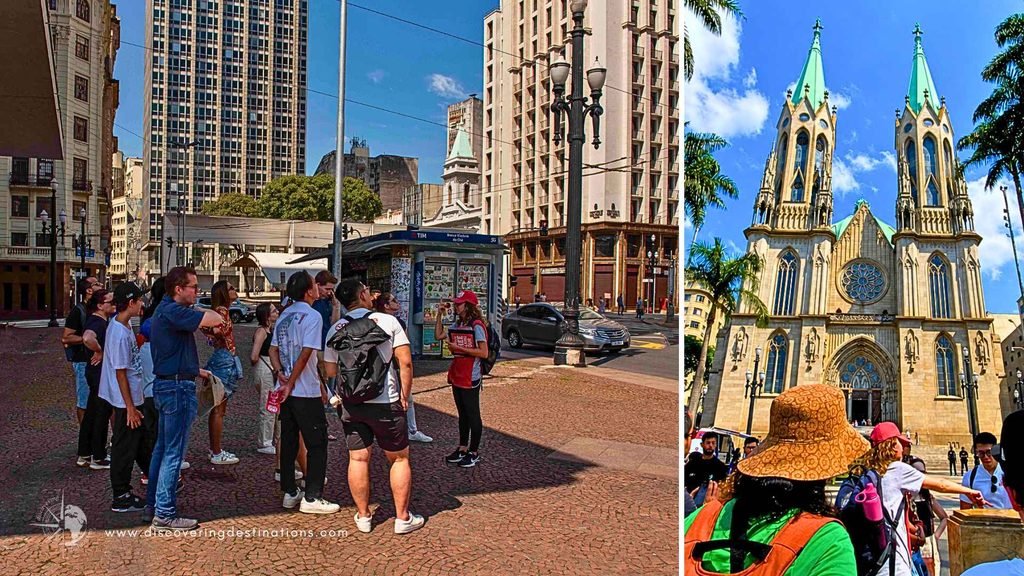
São Paulo has some great FREE walking tours, as well as affordable guided walking tours through GetYourGuide.
We’ve done walking tours ourselves and really enjoy this way of discovering the city — especially in areas like Downtown São Paulo, where having a local guide can add context and make the experience feel more relaxed.
🇧🇷 Brazil Note: A little awareness is useful in many Brazilian cities, but the experience can vary a lot depending on the destination and even the neighbourhood. It’s always worth checking current local advice for the places you plan to visit.
Getting Around São Paulo
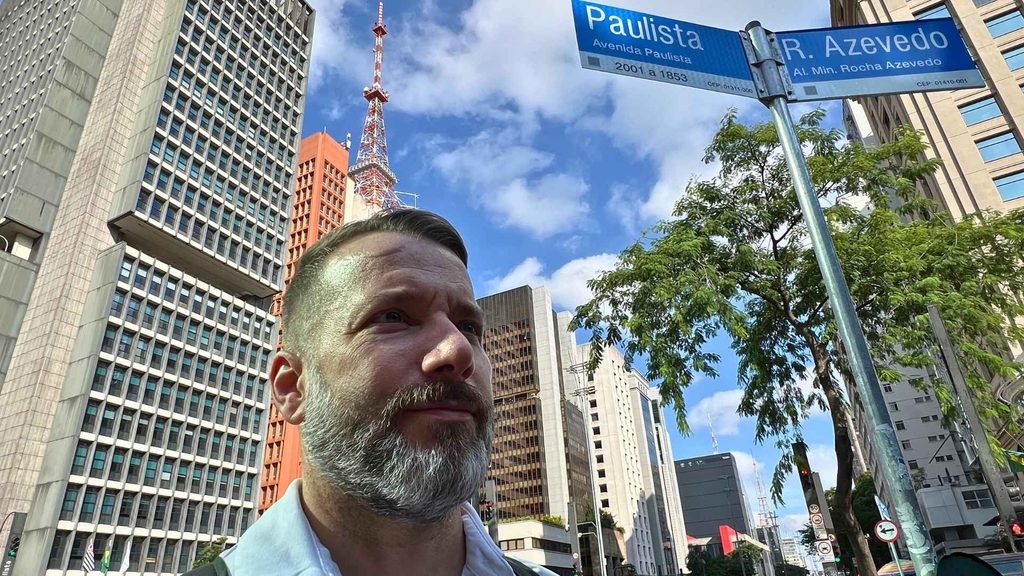
Uber is one of the easiest ways to get around São Paulo, especially when you’re new to the city. It’s widely used by locals, works day and night, and makes things easier when you don’t speak much Portuguese. Double-check the driver’s name and license plate before getting in — and if you want extra peace of mind, Uber’s in-app security code feature lets you confirm your ride with a PIN before you get in.
The Metro is also a great option and can actually be faster than driving during rush hour, depending on where you’re going. Serge was pleasantly surprised the first time he used it — it’s extensive, relatively easy to navigate, and useful for many of the areas visitors tend to explore. Just expect it to get crowded during peak hours.
As for renting a car, most first-time visitors won’t need one for exploring São Paulo city itself. Traffic can be heavy, parking can be complicated, and the city also has the rodízio traffic-restriction system to consider. We usually stick to a combination of Uber and public transportation in the city, and save rental cars for trips outside São Paulo.
Arriving at Guarulhos Airport
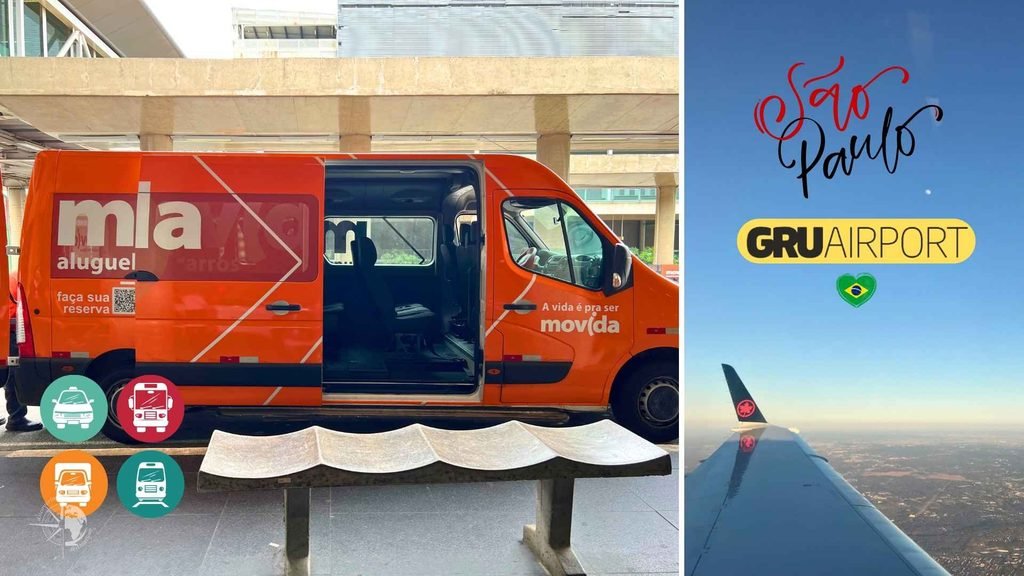
Getting from GRU (Guarulhos Internacional Airport) into the city deserves a little more planning, since there are several options — Uber, taxis, buses, trains, and private transfers. We’ve already put together a full breakdown of the choices, how Uber pickup works at GRU, and what we personally recommend.
👉 Read our complete guide to arriving at São Paulo’s Guarulhos Airport (GRU).
If you prefer everything arranged before you land, a pre-booked airport transfer is worth considering, especially after a long international flight — our GRU guide walks through when that makes sense versus buses or the train.
Important: One thing worth having ready before you even land: requesting an Uber at GRU means checking your exact pickup zone in the app, since the airport is large. That’s one more reason to have mobile data working from the moment you touch down — which ties back to the eSIM setup covered earlier.
Brazilian Currency: Money and Payments
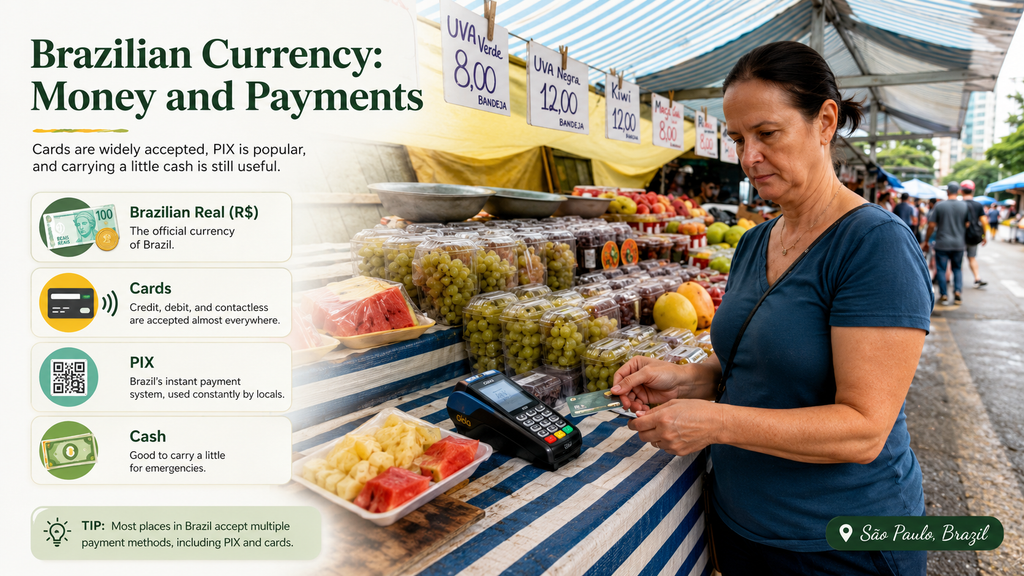
This is where a lot of first-time visitors overthink it, so let’s simplify.
- Currency: Brazilian Real (R$). One unit is a “real,” but you’ll hear it called “reais” in the plural — as in “cinquenta reais” for fifty reais. Small detail, but it helps to recognize it when someone says it out loud.
- Cards: Accepted almost everywhere — credit, debit, and increasingly contactless, even at small shops and street vendors
- PIX: Brazil’s instant payment system, used constantly by locals for everything from restaurants to markets. It traditionally requires a Brazilian CPF and bank account, which most tourists don’t have — though a few fintech apps now offer workarounds if you specifically want to use it. In practice, most visitors get through São Paulo just fine on cards alone
- Cash: It’s still a good idea to carry a small amount for emergencies, but in big cities like São Paulo, you’ll rarely need much. These days, most places prefer card or PIX, and smaller businesses don’t always have much change on hand.
You’ll sometimes hear “PIX ou cartão?” — PIX or card? Just say “Cartão.” Nobody blinks.
We rarely convert prices mentally anymore since digital payments are so normal here — the machine usually just shows the total. A few practical notes: avoid exchanging large sums at the airport, check your bank’s international fees before traveling, and if you need to withdraw cash, try to use ATMs inside shopping malls or other busy indoor places rather than machines on the street.
💡 Security tip: São Paulo has plenty of shopping centers, so finding an ATM in a more comfortable indoor setting is usually easy. We also prefer carrying only the cash we actually expect to use rather than a large amount at once.
🇧🇷 Brazil Note: Cards, PIX, and that exact checkout question are consistent across Brazil, not unique to São Paulo.
Small Cultural Things You’ll Notice
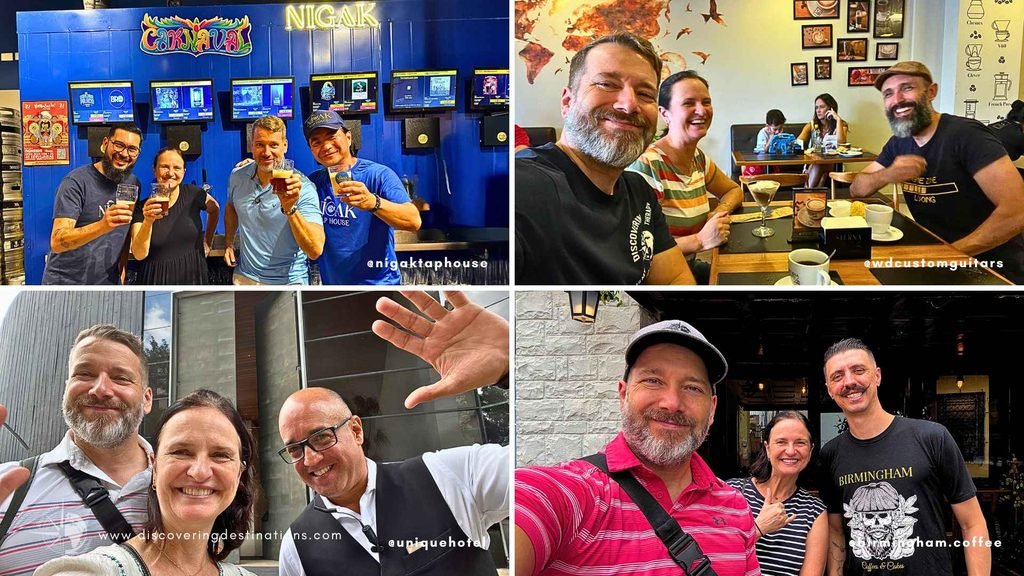
Without trying to generalize, a few things may feel different from what you’re used to — not better or worse, just part of everyday life in São Paulo and, in many cases, across Brazil.
Greetings Can Feel Warmer
Depending on the situation, greetings can feel a little more personal than in Canada or the U.S. A kiss on the cheek is common in many casual social settings, especially between women and between men and women. And once people know you a little better, hugs are often more common than a simple handshake.
Conversations Can Get Personal Quickly
People may stand a little closer, make more eye contact, and start chatting quite easily. In many situations, that friendliness comes from genuine curiosity and openness rather than intrusion.
A good example is our local feira livre — the weekly street market in my hometown. After Serge and I had been going there for just a couple of weeks while visiting my family, some vendors already recognized us. One day, when I realized I had forgotten my debit card and didn’t have enough cash, they even told me to take the fruit and pay them later.
That kind of familiarity can develop surprisingly quickly.
Even small everyday moments can feel different. In Montreal, it’s pretty common to share an elevator without saying much. In Brazil, someone might say hello, ask how you’re doing, wonder if you’re new in the building — and five minutes later tell you about fresh eggs they’re selling from a farm or invite you to the condominium’s Saturday food market.
For visitors, that extra curiosity can sometimes feel unexpected at first, but most of the time it’s simply part of the social atmosphere.
Social Time Can Be More Flexible
Casual plans don’t always start exactly on time, especially with friends or family. Business meetings and professional appointments tend to be much more punctual, so it really depends on the context.
And if you’re someone who really stresses about being exactly on time, this may take a little getting used to. We’ve had Brazilian friends arrive 40 minutes late to their own birthday celebration — at the restaurant they chose themselves! 😄
Of course, that doesn’t mean everyone is late or that you should expect delays everywhere. It’s just a good example of how social timing can sometimes be a little more flexible than what you may be used to in Canada or the U.S.
People Often Like to Help
One thing we notice a lot in Brazil is that if you ask for directions or help, people will often genuinely try to help — even if they don’t speak English. Sometimes that means gestures, Google Translate, or even asking someone else nearby to join the conversation.
Important Note: That said, especially in a big city like São Paulo, we still use common sense about who we ask for help. If we need directions, we usually step into a café, shop, hotel, pharmacy, or another established business rather than stopping just anyone on the street. If we’re driving, a gas station is usually our go-to place to ask.
It’s a simple habit that lets you benefit from how helpful people can be while still staying practical and aware.
A Little Portuguese Goes a Long Way
You don’t need to speak Portuguese fluently, but even a simple bom dia, por favor, or obrigado/obrigada can make interactions feel warmer and easier.
Brazilians often really appreciate hearing a foreign visitor try to speak Portuguese. You may hear the word gringo used casually for foreigners, and in many situations it’s simply descriptive rather than insulting. Making the effort to speak even a few words usually shows that you’re trying to connect, and people often respond with even more patience and willingness to help.
When Serge stopped worrying about doing everything “the right way” and just relaxed into the culture — being patient, smiling, chatting, and going with the flow — things consistently became easier and more enjoyable.
🇧🇷 Brazil Note: These social habits can feel different depending on where you travel in Brazil. Even as someone who grew up in São Paulo, I notice changes in pace, formality, and everyday interactions from one region to another. That’s part of what makes traveling around Brazil so interesting.
👉 Start learning Portuguese with Babbel.
Food Culture in São Paulo: A Few Things to Know
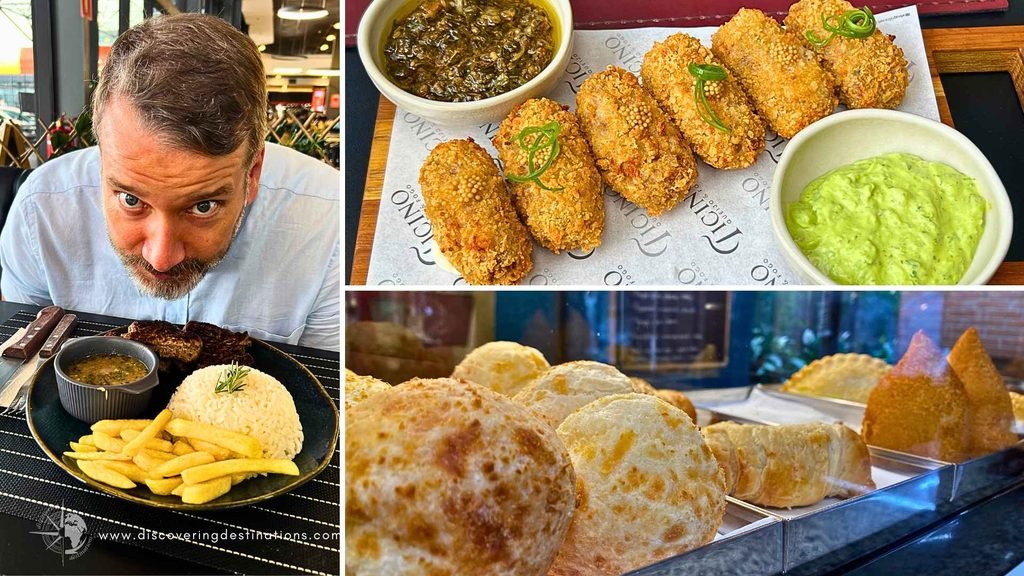
Breakfast & Brunch in São Paulo
If you’re coming from Europe, São Paulo breakfast culture may feel a little more familiar. São Paulo is a busy city, and many people are rushing to work in the morning, so a traditional everyday breakfast is usually simple and quick.
A classic combination is a small coffee or a pingado (café com leite / coffee with milk), paired with a pão na chapa — a pão francês toasted with butter on a hot grill. And despite the name, pão francês isn’t really French at all — it’s very Brazilian. Another favorite is pão de queijo, our famous cheese bread.
If you’re coming from England, the U.S., or Canada and you’re expecting a bigger brunch, the good news is that São Paulo now has plenty of cafés and restaurants offering everything from small brunch plates to full brunch experiences, especially in central and trendier neighborhoods.
And if your hotel includes breakfast, that’s usually a completely different experience. Many Brazilian hotel breakfasts are much more generous, with a full spread of breads, cakes, pão de queijo, eggs, cheeses, cold cuts, fresh fruit, juices, coffee, and more.
💡 Want a full São Paulo brunch experience? We went for brunch at the Skye Restaurant at Hotel Unique, and it was a really fun way to experience a more modern and stylish side of the city.
👉 Watch our full São Paulo brunch vlog here.
Lunch Is the Main Meal
In Brazil, lunch is often the main meal of the day, and in São Paulo you’ll see plenty of restaurants packed around lunchtime.
I (Eli) remember working in Downtown São Paulo for many years, and lunch often felt like a kind of social break with coworkers. It was a chance to step away from work, sit down together, and actually have a proper meal.
Many companies also give employees what is traditionally called a “Ticket Restaurante” — a meal benefit that today is usually provided on a card with a monthly balance that employees can use at restaurants and other food establishments.
A typical lunch is usually more substantial than just grabbing a quick snack. You’ll often see a plate with rice, beans, salad, vegetables, and a protein such as beef, chicken, pork, or fish.
“Por Quilo” Restaurants
“Por quilo” restaurants are extremely common in Brazil, especially in the lunch time, including in shopping malls and busy business areas.
They’re a very Brazilian experience and also very practical for visitors: you choose what you want from a buffet, place it on your plate, and then pay based on the weight of the food.
They’re everywhere in São Paulo and can be a great way to try a little bit of everything without committing to one specific dish.
Dinner Can Be Later
Because lunch is often the main meal of the day in Brazil, dinner can sometimes be lighter — but one thing visitors should know is that dinner often happens later than in Canada or the U.S., especially on weekends.
Around 8:00 or 9:00 PM is completely normal.
Serge and I have gotten used to eating earlier in Canada, so when we’re back in São Paulo, we sometimes head to a restaurant around 7:00 PM and notice it’s still fairly quiet. Then, little by little, people start arriving around 8:00, 9:00 PM, or even later.
So if you find a highly rated restaurant looking almost empty at 6:00 PM, don’t panic — you may just be a little early. Come back later and it could be completely packed.
Padarias Are Part of Everyday Life
You’ll find padarias all over São Paulo, and they’re much more than just bakeries.
Padarias have strong Portuguese roots, but over time Brazil made them its own.
In São Paulo, many are somewhere between a bakery, café, snack bar, and casual restaurant. You can stop for coffee, pão de queijo, sandwiches, pastries, or even a full meal.
Want to experience a real São Paulo padaria?
A few classics worth knowing are historic Padaria Santa Tereza in Downtown São Paulo, Bella Paulista near Avenida Paulista, and Galeria dos Pães in Jardins. Each gives you a slightly different version of São Paulo’s padaria culture — from traditional and historic to the huge all-day “superpadaria” style.
🎥 Want to see one in action? Watch our São Paulo walking tour vlog, where we visit Padaria Santa Tereza, considered the oldest bakery in Brazil still operating.
Coffee Is Small and Strong
São Paulo became one of the world’s most important coffee-producing regions and played a major role in Brazil becoming the world’s leading coffee exporter.
Coffee is also very social in Brazil. At work, during a visit with family or friends, or even during a quick chat, one of the first things you may hear is: “Do you want a cafezinho?”
If someone offers you a cafezinho, don’t expect a large North American-style coffee. It’s usually a small, strong coffee — and often part of the social experience as much as the drink itself.
Today, you’ll also find a growing Brazilian specialty coffee scene, with cafés focusing more on bean origin, roasting, brewing methods, and the journey from farm to cup.
🎥 Want to learn more about Brazilian specialty coffee? Watch our vlogs to see the experience for yourself.
Service Charge and Tipping
Tipping works a little differently in Brazil than it does in Canada.
Here in Canada, we’re often asked to choose a tip percentage — usually around 15% to 20% — on top of the meal total. In Brazil, many sit-down restaurants already add a service charge, often around 10%, directly to the bill.
Before paying, you can simply ask:
“O serviço está incluído?” — Is the service included?
When the service charge is already included, most people simply pay the total shown on the bill. For especially great service, you can always leave a little extra, often in cash, depending on the restaurant.
On the other hand, if the service was poor, you can ask for the service charge to be removed.
From our experience, restaurant service in Brazil has usually been very good, so we normally leave the service charge in place and sometimes add a little extra when someone has been especially helpful.
For cafés, bakeries, snack bars, and other counter-service places, tipping is generally not expected in the same way it often is in Canada. The service charge is mainly something you’ll notice at sit-down restaurants and bars with table service.
São Paulo Is Extremely International
São Paulo is one of the best cities we’ve visited for tasting food from around the world. That’s one of the city’s greatest strengths — its immigrant history has shaped an incredibly diverse food scene.
You can find:
- Excellent Japanese food in Liberdade
- Strong Italian influence in neighborhoods like Bixiga
- Portuguese classics such as bacalhau, bolinho de bacalhau, arroz de polvo, alheira, and pastel de nata
- Middle Eastern food, especially Lebanese and Syrian influences
- Regional Brazilian cuisine from different parts of the country
- And plenty more from around the world
💡 Eli’s Food Tip: One of the best ways to understand São Paulo is through its food. Don’t only look for “Brazilian restaurants” — try a neighborhood padaria, a por-quilo lunch, a pastel at a street market, and some of the international food the city is famous for.
Want to Taste São Paulo’s International Side?
Liberdade is one of the best neighborhoods to experience São Paulo’s multicultural food scene. If you prefer exploring with a local guide, this 2-hour Liberdade Street Food Tour combines neighborhood history with tastings inspired by Japanese, Korean, Brazilian, and other immigrant influences.
👉 Check the Liberdade Street Food Tour here.
💡 Eli’s Tip for Mercado Municipal: If you decide to visit “The Mercadão” food market, I would say is still worth visiting for its architecture and classic São Paulo foods like the mortadella sandwich and pastel de bacalhau. But we’d be cautious with the fruit stalls — prices can be much higher than expected, especially for visitors. If you want fruit, check the price clearly before accepting samples or buying.
Other Practical Things Worth Knowing
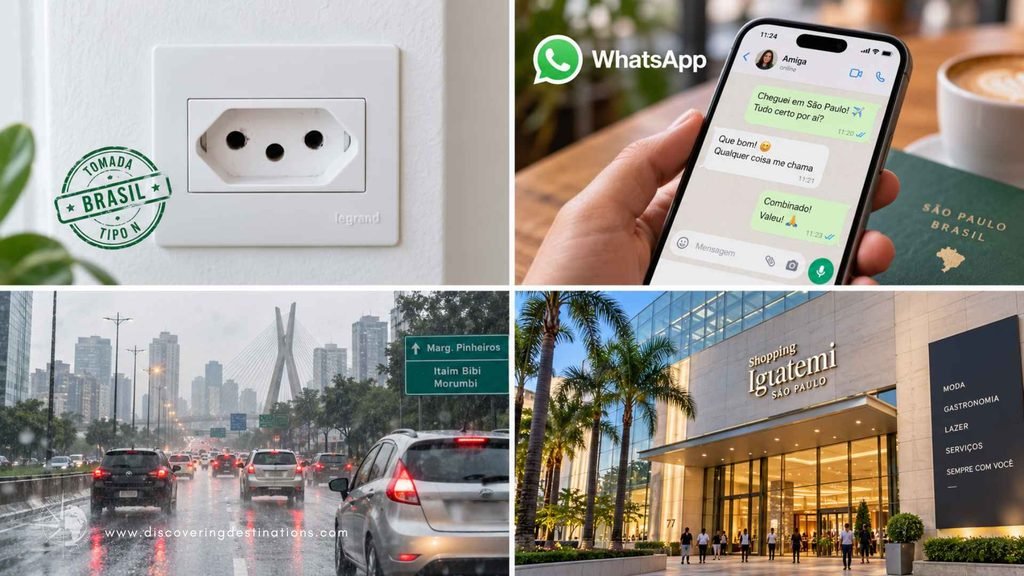
These are some of the little everyday things that can make your first few days in São Paulo easier.
WhatsApp Is Everywhere
WhatsApp is used constantly in Brazil — not just between friends and family.
Restaurants, guides, hotels, small businesses, delivery services, and even some shops may communicate through WhatsApp rather than phone calls or email.
If you don’t already use it, it’s worth installing before your trip.
Shopping Malls Are a Bigger Deal Than You Might Expect
Shopping malls in São Paulo are much more than places to shop.
They often have restaurants, cafés, cinemas, supermarkets, pharmacies, services, and sometimes events — so they function as genuine social hubs too.
They can also be very useful if you need an ATM, somewhere comfortable to eat, or simply a break during a busy day.
You May Be Asked for a CPF at Checkout
A CPF is a Brazilian tax identification number, and you may hear cashiers ask:
“CPF na nota?”
This can happen even when you’re buying something small.
Most international visitors won’t have a Brazilian CPF, and that’s usually fine — just say “não tenho CPF” (I don’t have a CPF) and the cashier can normally continue without it.
Sundays Move Slower
Sundays can be a little quieter, especially in residential neighborhoods, and some smaller businesses may have reduced opening hours.
At the same time, Sundays can be one of the nicest days to experience São Paulo at a slower pace. Avenida Paulista is especially fun on Sundays, when much of the avenue is typically closed to vehicle traffic and becomes a pedestrian space with people walking, cycling, enjoying street performers, music, food, and other activities.
🎥 Want to see what Avenida Paulista feels like on a Sunday? We explored it ourselves and shared the experience in our São Paulo vlog.
👉 Watch our Avenida Paulista vlog here.
São Paulo Weather Can Surprise You
Don’t assume that São Paulo is hot all year just because it’s in Brazil.
The weather can change quite a bit during the day, and cooler mornings or evenings can surprise visitors, especially outside summer. A light jacket or extra layer can be useful depending on the season.
Rain is also something to keep in mind. São Paulo has traditionally had heavier rain during the warmer summer months, although lately the weather can feel less predictable.
When heavy rain does hit, it can come down very quickly, and some parts of the city may experience flooding. If that happens, it’s best to avoid flooded streets, underpasses, or trying to cross fast-moving water, and give yourself extra time to get around.
💡 Eli’s Weather Tip: If the forecast is calling for strong rain, check conditions before heading out and be flexible with your plans. Sometimes waiting it out for a little while is the easiest option.
Pay Attention to Which Airport You’re Using
São Paulo has more than one major airport.
GRU — Guarulhos International Airport handles most international flights, while CGH — Congonhas Airport is much closer to central São Paulo and is mainly used for domestic flights.
They are in very different locations, so always double-check your airport before planning transportation.
👉 Arriving through GRU? We have a complete guide with our tips for getting from Guarulhos Airport into São Paulo.
Electricity and Outlets
Brazil uses the Type N electrical plug, so international visitors may need a travel adapter.
Voltage can vary depending on the region and even the property, so it’s a good idea to check your hotel or accommodation before plugging in appliances.
Most modern phone and laptop chargers are dual-voltage and usually work with 100–240V, but higher-power items like hair dryers or straighteners may not.
🇧🇷 Brazil Note: Brazil’s plug standard applies nationwide, but voltage can vary from place to place. It’s always worth checking before using your devices.
Before You Go
Brazil isn’t a country you can “see” in one trip, and São Paulo isn’t a city you fully discover in one either.
Every trip we’ve planned well — for ourselves or for people who’ve asked us for advice — has started with the same thing: clear priorities. How much time do you have? What kind of experience do you want? Food, neighborhoods, culture, museums, parks, nightlife, day trips?
If there’s one thing I want you to take from this guide, it’s that São Paulo is much easier to enjoy when you arrive curious, informed, and a little flexible.
You don’t need to plan every hour. Leave some space to wander, stop for a coffee, discover a neighborhood you didn’t expect to love, or spend longer somewhere that surprises you.
Even after years of living in Montreal, whenever I go back to São Paulo, it still feels like home. And I hope this guide helps you arrive feeling a little more prepared — and a lot more excited to discover it for yourself.
Have questions about your specific trip? Drop them in the comments — happy to help you plan.