

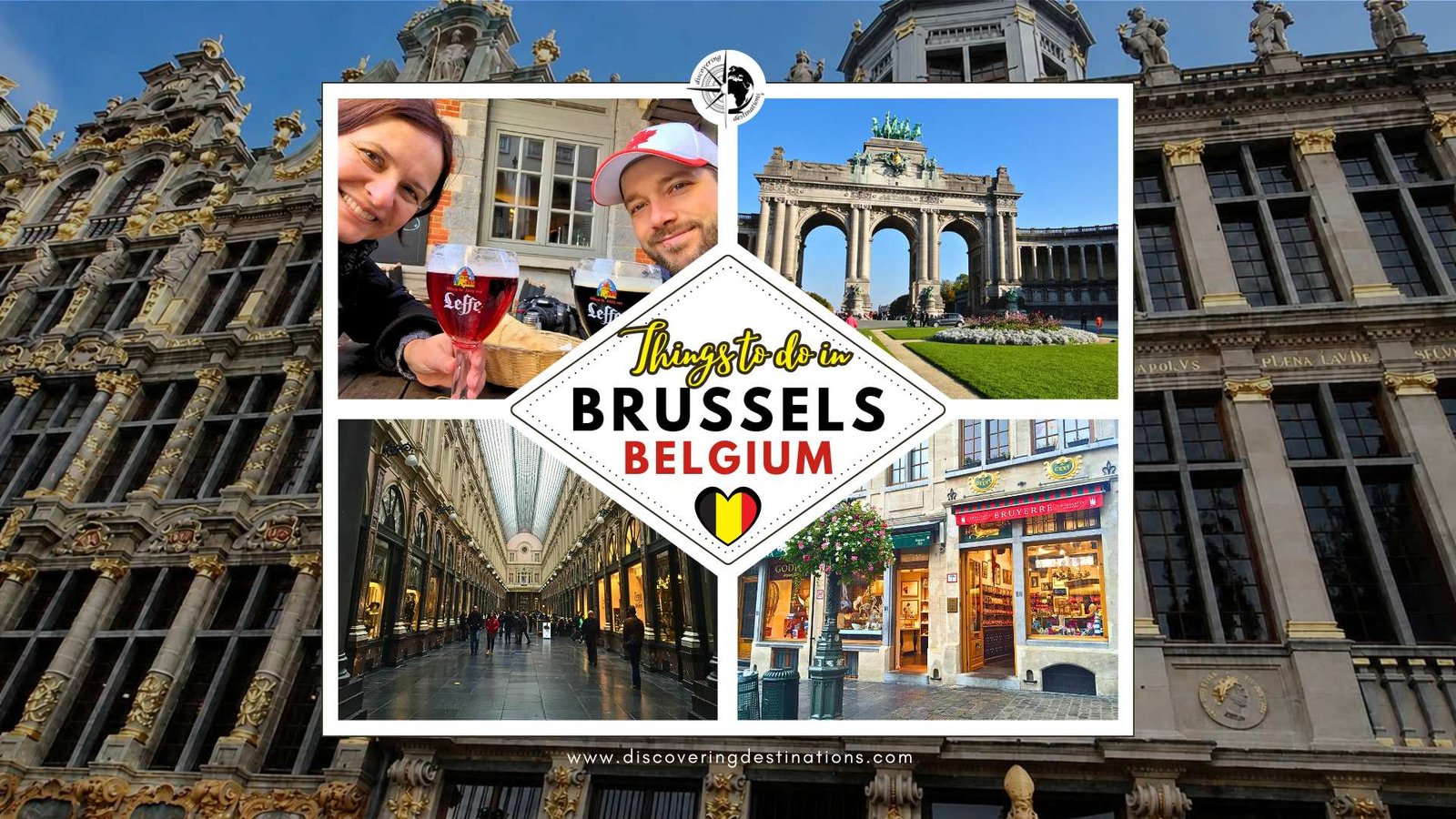
Belgium is famous for chocolate and waffles. Honestly, if you haven’t tried real Belgian chocolate yet, drop what you’re doing and go find some. It’s worth every calorie.
But if you’re looking for things to do in Brussels beyond the chocolate shops, the city has plenty to offer.
Back in 2015, we (Eli and Serge from Discovering Destinations) spent a few days exploring Brussels and Bruges. This small, incredibly well-organized country left us wanting to come straight back.
In this post, we’ll share everything we saw, loved, and learned about Brussels back in 2015, including:
- Places we visited and would happily return to
- Things to do around the city
- What to eat in Brussels
- Where we stayed
- Getting around
- Practical Brussels travel tips and FAQ
We’ve also added a few updates along the way, so you have current, accurate information for your own trip.
DISCLOSURE NOTE: Our Blog Post contain few affiliate links to products We personally use, trust, and suggest. These help support our efforts in creating valuable and informative content.
When you make a purchase or engage with our affiliate partners through these links, we may earn a small commission at no extra cost to you. Your support enables us to continue producing quality content and exploring new topics. Thank you for being a part of our journey and helping us grow! Sharing is caring ! Click here to learn more.
How We Ended Up Choosing Brussels, Belgium’s Capital
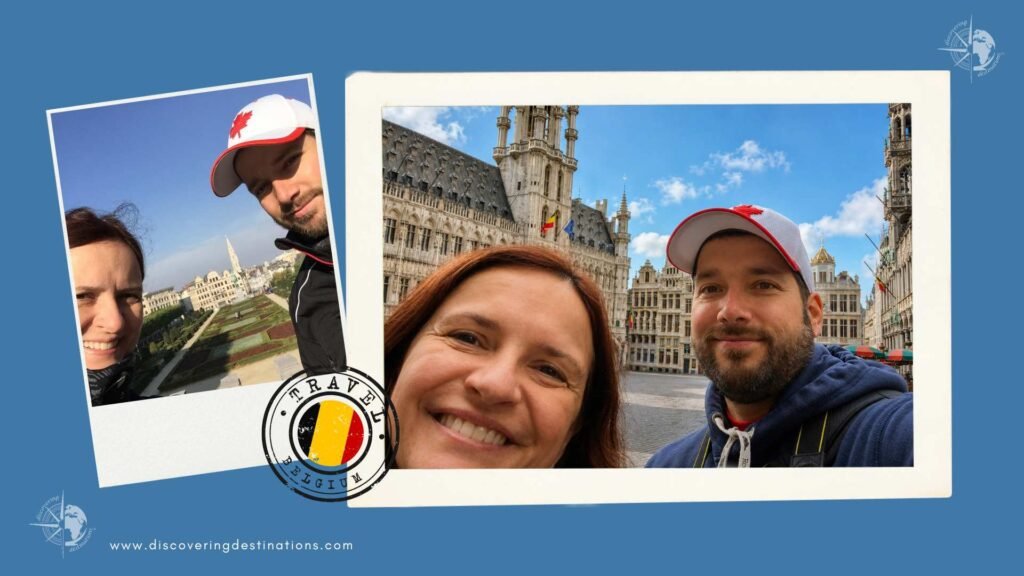
Sometimes a trip starts with a plan. Ours started with a postcard.
Earlier in 2015, a postcard from Brussels showed up in our mailbox by mistake — it was meant for the same apartment number, just in the building next door. Serge decided to take it as a sign anyway.
Around the same time, our niece Juliana had visited Brussels twice and couldn’t stop raving about it. Between the postcard and her enthusiasm, we started reading up on Brussels and Belgium in general to plan our own trip. Juliana was the one who suggested we add Bruges, and later Amsterdam, to the itinerary — but we decided to start in Brussels, and booked our trip for October 2015.
A Quick Introduction to Brussels
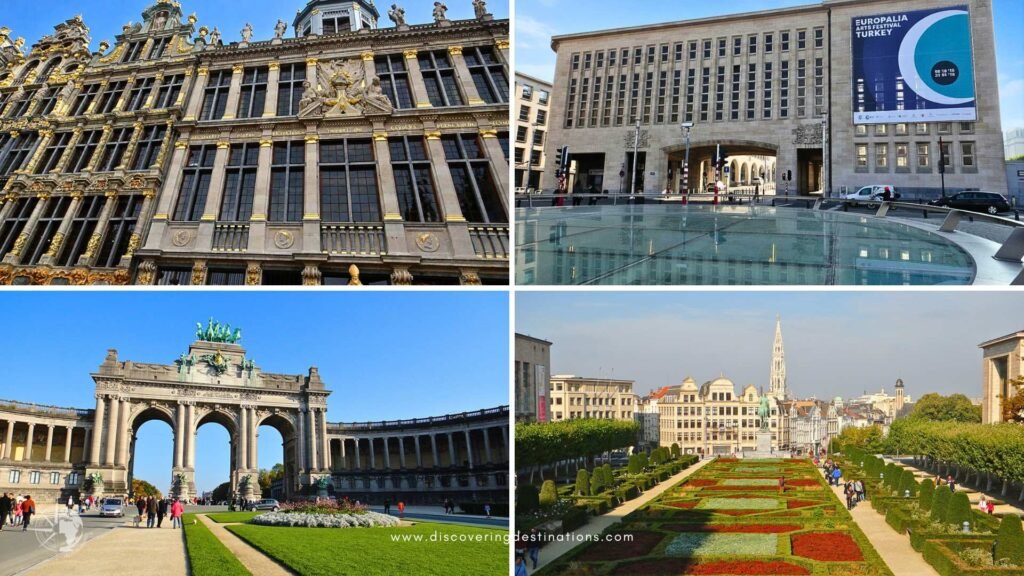
Before we get into our own experience, here’s a bit of background for anyone planning their own trip. Brussels is the capital of Belgium and, informally, the “capital of Europe” — it hosts core institutions of the European Union, including the European Commission and the Council of the European Union.
Currently, around 1.2 million people live across its 19 municipalities, and the city’s roots go back to 1229, when it was granted its first city charter.
Today, Brussels is officially bilingual, with French and Dutch both recognized as official languages, alongside German at the national level. For tourism purposes, this works out well for visitors — we found that almost everyone we met spoke English. Serge speaks French, which came in handy, but I (Eli), who don’t, never had any trouble communicating either.
That mix of medieval history and modern EU politics is part of what makes Brussels such an interesting place to explore on foot — and exactly the kind of city we love covering here on Discovering Destinations.
How Long Should You Stay in Brussels?
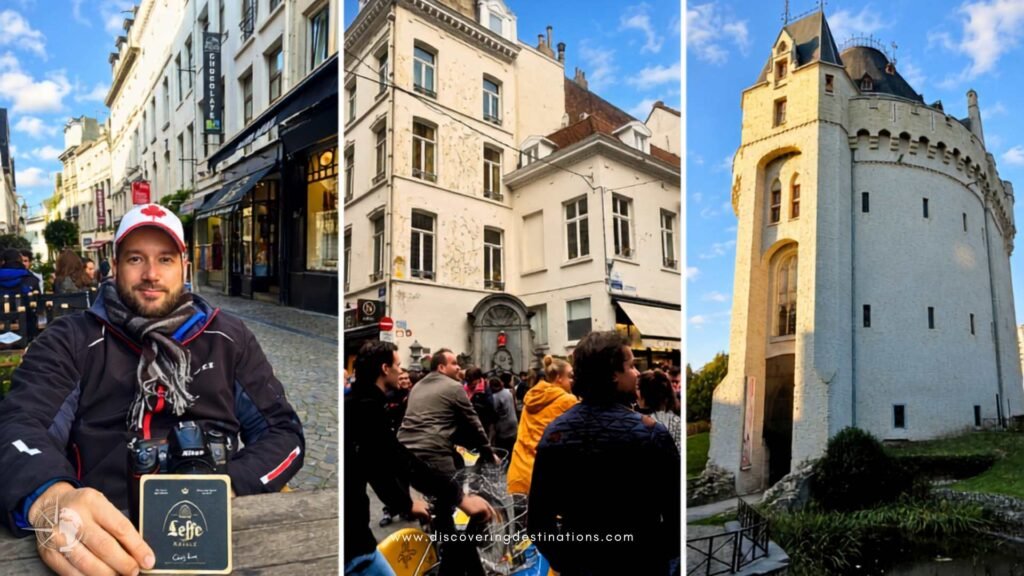
We spent 4 days and 4 nights in Brussels, plus a quick overnight trip to Bruges. Looking back, 3 to 4 full days is a comfortable amount of time to see the main sights and still wander into a few unplanned corners of the city.
Bruges was a different story — we only gave ourselves one night there, and we wished we’d stayed longer (you can read about that trip separately on the blog). But with Brussels, the timing felt right.
Of course, how long you stay always depends on your budget and how much free time you have. If you’re short on days, you can still hit the highlights below in a long weekend.
Where to Stay in Brussels: Best Areas and Our Hotel Experiences
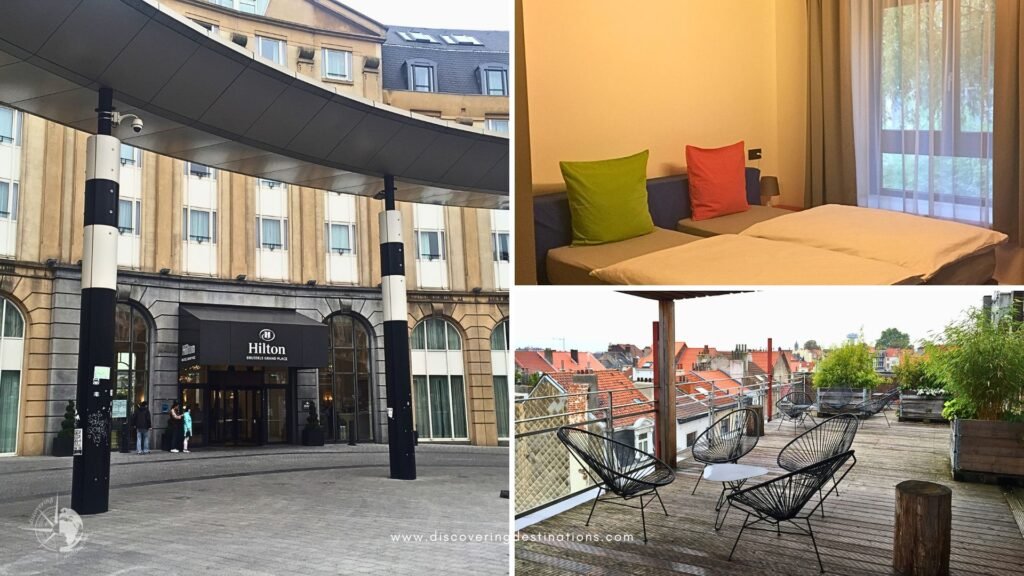
Brussels has a wide range of neighbourhoods, from the historic streets around Grand-Place to elegant areas filled with cafés, museums, parks, and local restaurants. The best place to stay will depend on whether you prefer to be within walking distance of the main attractions or somewhere quieter with good public transportation.
During our trip, we stayed in two different areas: first at the colourful FunKey Hotel in Schaerbeek, and later at what was then called the Chelton Hotel EU, now known as 9Hotel Chelton, in the European Quarter. Both were outside the historic centre, but they gave us a chance to experience a more local side of Brussels.
Best Areas to Stay in Brussels
- Historic Centre and Grand-PlaceBest for first-time visitors, sightseeing, short stays, restaurants, and walking to major attractions. This is the most convenient area for places such as Grand-Place, the Galeries Royales Saint-Hubert and Manneken Pis.
- Sablon and Petit Sablon
Best for elegant surroundings, chocolate shops, antiques, cafés, and a quieter atmosphere close to the centre. The wider Sablon area is known for its upscale character, historic church and Belgian chocolate shops. - European Quarter and Schuman
- Best for museums, parks, business trips, public transportation, and a calmer stay. In addition to the European institutions, this area is close to Cinquantenaire Park, Leopold Park and several museums.
- Schaerbeek and the Plasky Area
Best for better-value accommodation, residential surroundings, Art Nouveau architecture and a more local experience. FunKey Hotel is located on Rue Artan in Schaerbeek. - Louise, Ixelles and Flagey
Best for restaurants, shopping, nightlife and travellers who enjoy lively neighbourhoods outside the tourist centre. Louise is known for upscale shopping and hotels, while Flagey has a more cosmopolitan and cultural atmosphere. - Saint-Gilles
Best for cafés, Art Nouveau architecture, local markets and a neighbourhood atmosphere. The area around Parvis de Saint-Gilles is especially popular for restaurants and evenings out.
Our Brussels Hotel Picks: Where We Stayed and Other Options
We stayed in two very different Brussels hotels during our trip. Although neither was directly beside Grand-Place, both were connected to the centre and gave us a more local experience. Below, we are sharing what each stay was like, who we believe it would suit, and where travellers can compare current prices.
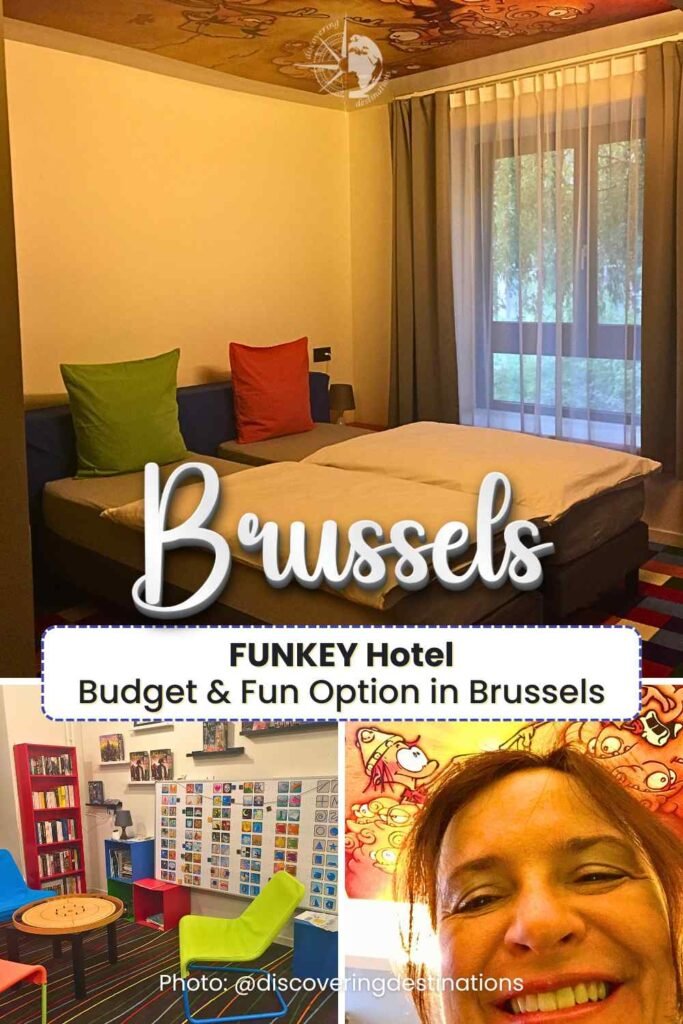
FunKey Hotel
Where we stayed during our 2015 Brussels trip
Budget at the time: $–$$
Area: Schaerbeek
Best for during our stay: Colourful décor, families, good value and a quieter neighbourhood easy access to Hassan Tower
We stayed two nights at FunKey Hotel during our Brussels trip in 2015. Although our taxi driver had never heard of it, the hotel turned out to be one of the most memorable places we stayed during this journey.
The colourful décor, generous breakfast, board games and small complimentary extras gave it plenty of personality. We also appreciated staying in a quieter neighbourhood while remaining connected to Brussels’ historic centre by public transportation.
Important update: FunKey Hotel still appears in some tourism and accommodation directories. However, at the time of updating this article, we could not confirm current availability or find it bookable through the major hotel platforms. We recommend verifying its operating status directly before making plans.
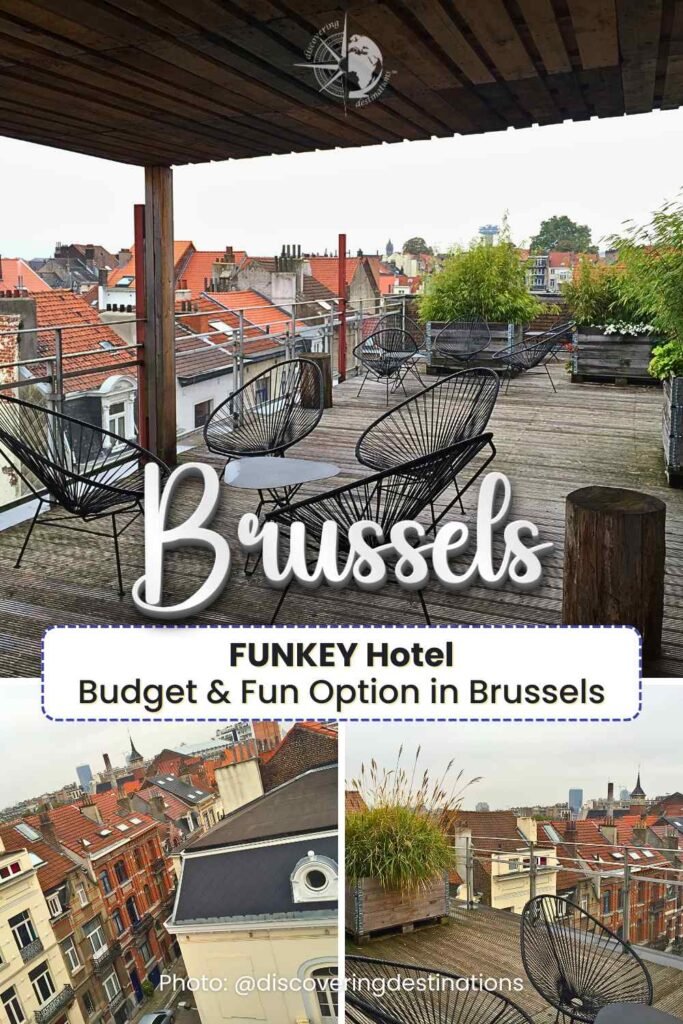
Chelton Hotel EU now know as 9Hotel Chelton
Where we stayed during our 2015 Brussels trip – Formerly Chelton Hotel EU
Budget: $$–$$$ | Area: European Quarter
Best for: Modern comfort, public transportation, museums and quieter stays
When we returned to Brussels after visiting Bruges and Amsterdam, FunKey Hotel was fully booked. Therefore, we moved to what was then called the Chelton Hotel EU, which has since been renovated and rebranded as 9Hotel Chelton.
At the time of our visit, we found the hotel clean, modern and comfortable. Our room included a private bathroom, and the rooftop terrace offered lovely views over the surrounding neighbourhood.
Today, 9Hotel Chelton is described as a 49-room hotel in the European Quarter, with a relaxation area, swimming pool and honesty bar. It is also close to Schuman and the European institutions.
This location works well for travellers who prefer a quieter area while remaining connected to the historic centre by metro.
Hilton Brussels Grand Place
Guests love the convenient spot for exploring the area.
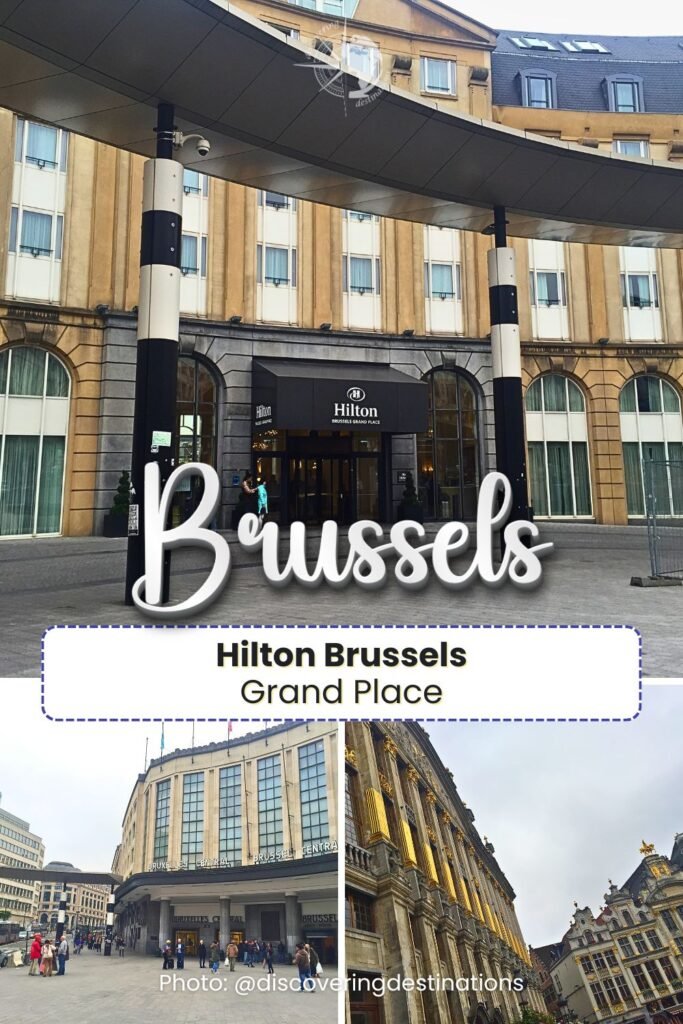
Hilton Brussels Grand Place
Budget: $$$–$$$$ | Area: Historic Centre / Central Station
Best for: First-time visitors, sightseeing and staying close to the main attractions
We didn’t stay at Hilton Brussels Grand Place, but we passed right by it during our time in Brussels and immediately noticed how convenient the location is. It sits at the edge of the historic centre, close to Brussels Central Station and only a short walk from Grand-Place, Mont des Arts, Galeries Royales Saint-Hubert and many of the sights we visited.
If we wanted to stay right in the middle of the action on a future trip, this is the kind of location we would seriously consider. It can be especially appealing if you only have a few days in Brussels and want to spend more time exploring on foot and less time commuting.
Things to Do in Brussels
Brussels was a fun city for us to explore at our own pace. We loved walking through its historic streets and discovering different neighbourhoods along the way.
Some places were already on our list. Others were simply discoveries we made while wandering around the city.
Here are the Brussels sights and experiences that stood out most from our trip.
Grand Place (Grote Markt), Brussels
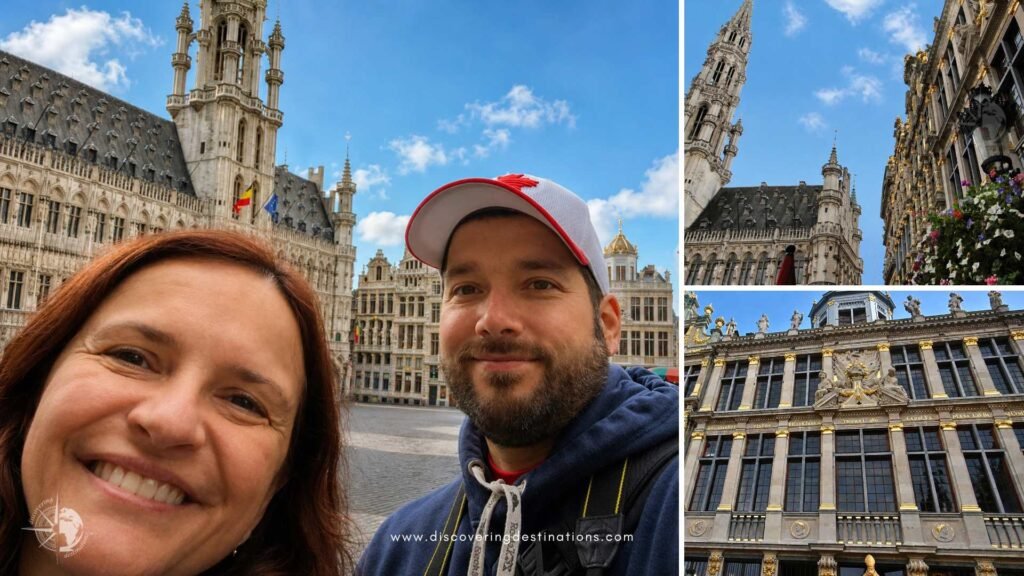
Start here. The Grand Place sits right in the heart of the Old Town and is genuinely one of the most beautiful squares we’ve seen in Europe — beautifully preserved, packed with detail, and impossible to photograph in just one shot.
It’s been a UNESCO World Heritage Site since 1998, and the guildhalls surrounding it mostly date from the late 17th century.
The square’s centerpiece is the Town Hall (Hôtel de Ville), built between 1401 and 1455 and still one of the most recognizable buildings in Brussels. Grab a map from the square — it’ll point you toward the chocolate shops and restaurants tucked into the surrounding streets.
Galeries Royales Saint-Hubert, Brussels
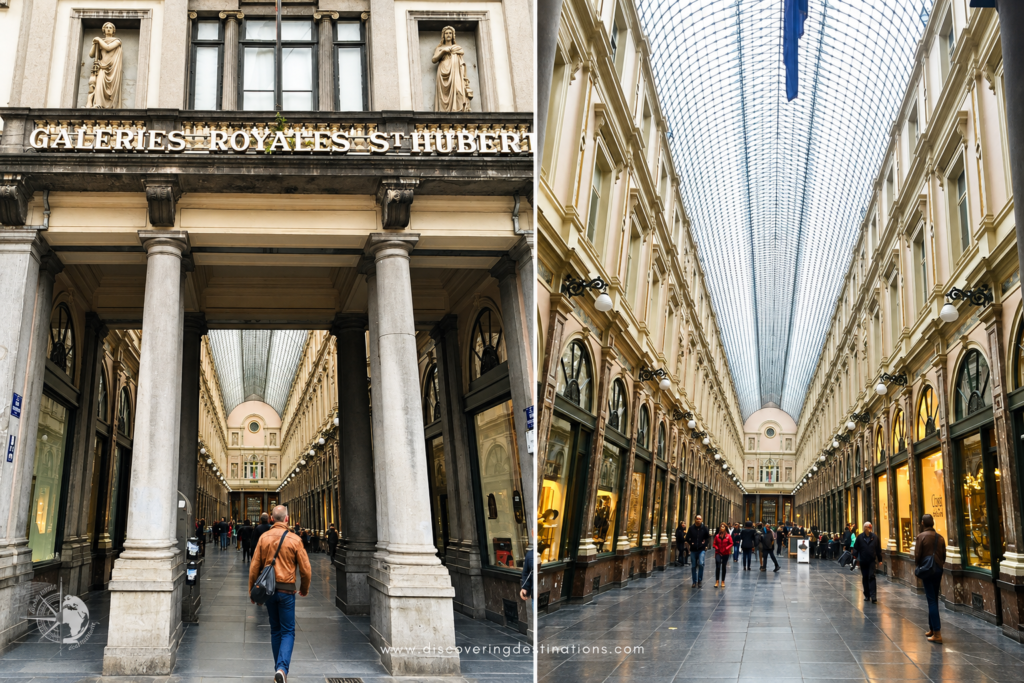
A short walk from the Grand Place, this covered shopping arcade has a stunning arched glass roof and a mix of high-end boutiques, cafés, and small theaters. Even if you’re not planning to buy anything (we weren’t), it’s worth strolling through just for the architecture.
Manneken Pis and Jeanneke Pis
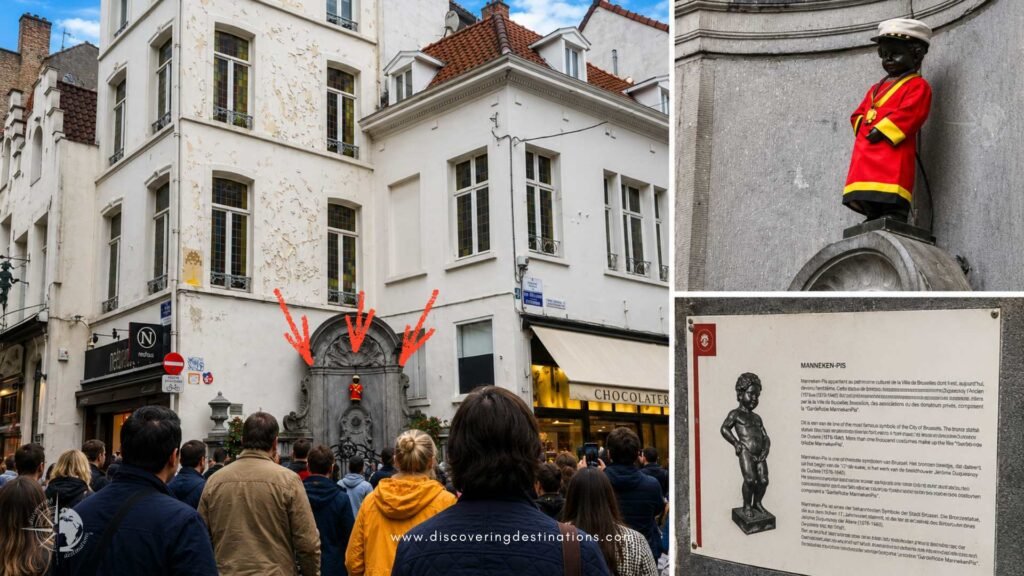
You can’t visit Brussels without seeing the Manneken Pis — a small bronze statue of a boy, famously tiny in person, that’s become one of the city’s most beloved symbols. The statue you see today was created by sculptor Hiëronymus (Jérôme) Duquesnoy the Elder and installed in 1619.
Interestingly, the original bronze figure is now kept safely in the Brussels City Museum, and a replica stands in its place after being stolen and recovered over the years.
Nearby, look for the Jeanneke Pis, the lesser-known “girl version,” which is hidden in the narrow alleyway of Impasse de la Fidélité (fidelity alley), tucked into a small street close to several restaurants south of the Grand Place.
Visit Notre-Dame de Bon Secours Church
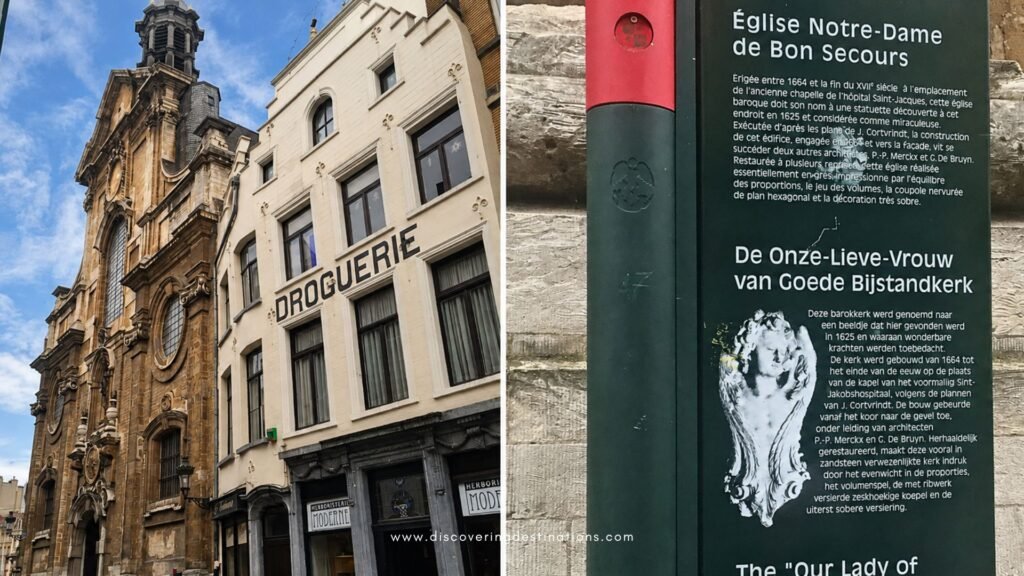
While wandering through central Brussels, we also stopped at Notre-Dame de Bon Secours, a beautiful Baroque church that we came across almost by accident. This is exactly the type of place we love finding while walking around a city — something that wasn’t necessarily on our original checklist but made us stop and take a closer look.
If you’re already exploring Grand-Place and the surrounding streets, it’s an easy architectural stop to add along the way.
Sablon and Petit Sablon
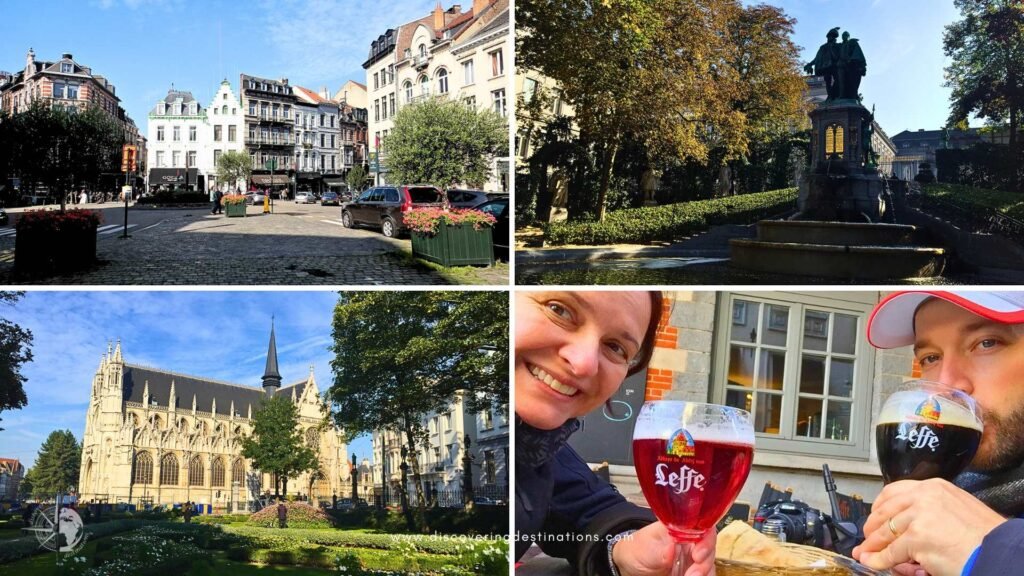
Sablon was one of the areas we enjoyed most in Brussels. This elegant historic neighbourhood is centred around two nearby squares: the lively Place du Grand Sablon and the smaller, garden-like Place du Petit Sablon.
As we explored the area, we came across street musicians and a small market filled with antiques and interesting objects. It felt like a wonderful place to slow down, look at the architecture, stop for something sweet and simply enjoy the atmosphere.
What to See and Do Around Sablon
- Visit the Church of Our Lady of Victories at the Sablon: Step inside this impressive Gothic church or admire its detailed façade from the square.
- Walk through the gardens of Petit Sablon: This small landscaped square is surrounded by statues, greenery and ornate iron fencing. It is a peaceful place to take a short break from sightseeing.
- See the Fountain of the Counts of Egmont and Hornes: Located near Petit Sablon, this historic monument adds even more character to the square.
- Explore Place du Grand Sablon: Walk around the main square to discover antique stores, galleries, cafés, restaurants and beautiful historic buildings.
- Browse the antique market: We found a small market during our visit, which made the area even more interesting. Market schedules can vary, so it is worth checking the current days and hours before going.
- Try Belgian chocolate at Wittamer: This well-known Brussels chocolatier and pastry shop has been established on Grand Sablon for generations. It is a tempting place to stop for chocolates, pastries or macarons.
- Discover Pierre Marcolini: Chocolate lovers can also visit one of Pierre Marcolini’s Sablon boutiques and browse its selection of Belgian chocolates and gift boxes.
- Take a break at Stella Sablon: We stopped at Café Leffe here during our 2015 trip, but it has since closed. Today, Stella Sablon occupies this Grand Sablon location and can be a good alternative for a break while exploring the neighbourhood.
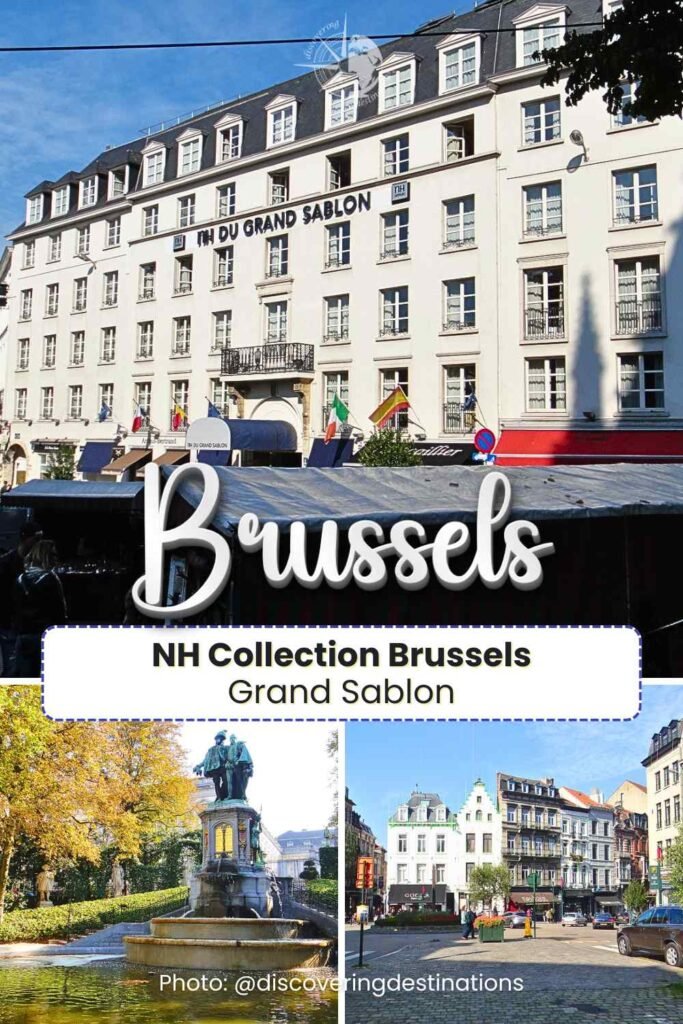
NH Collection Brussels Grand Sablon
Budget: $$$–$$$$ | Area: Grand Sablon
Best for: Elegant surroundings, central location, chocolate shops and cultural attractions
Located directly on Place du Grand Sablon, this upscale hotel is a great option for travellers who want to stay in one of Brussels’ most charming areas. Guests are just steps from the Church of Our Lady of Victories at the Sablon, antique stores, cafés and some of the city’s best-known chocolate shops.
The hotel offers modern rooms, family accommodations, free Wi-Fi and a fitness centre. Brussels Central Station is approximately 700 metres away, while the Royal Museums of Fine Arts, the Royal Palace and the historic centre can all be reached on foot.
Although we did not stay here, we photographed the hotel while exploring Sablon and immediately noticed its excellent location. Since this was one of our favourite areas in Brussels, we believe it could be a wonderful choice for travellers who prefer an elegant neighbourhood that remains convenient for sightseeing.
Mont des Arts, Brussels
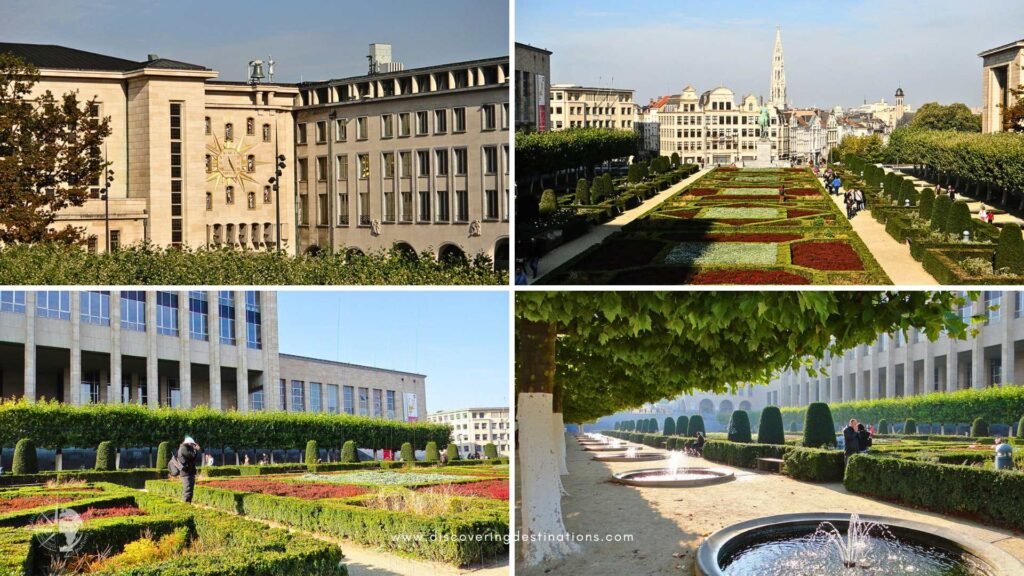
This elevated garden area offers some of the best views in Brussels. From here, you can spot the Town Hall’s tower over the Grand Place and, on a clear day, the Koekelberg Basilica and the Atomium in the distance. It’s also a natural starting point for walking to the Royal Museums of Fine Arts.
Parc du Cinquantenaire, Brussels
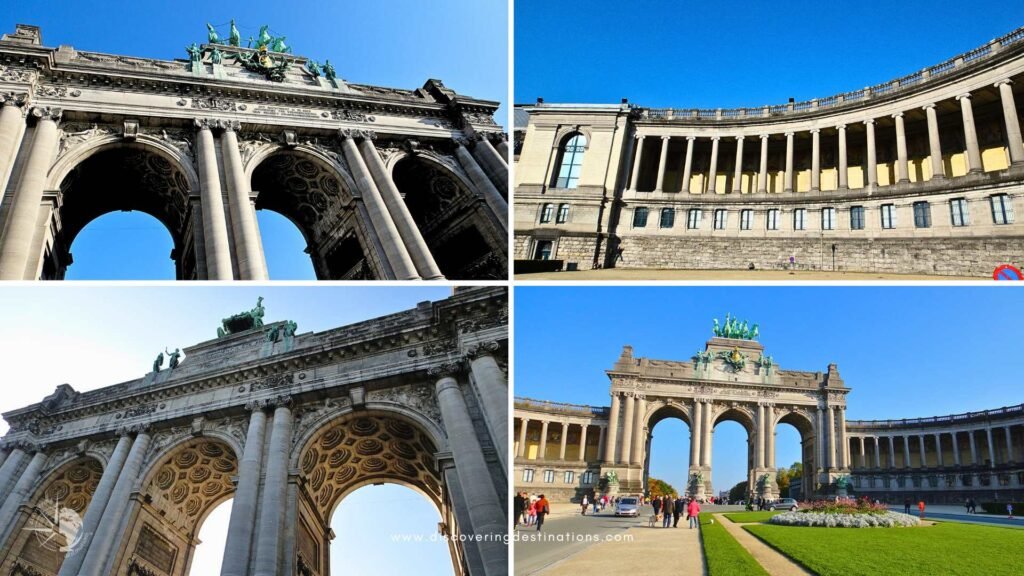
We also visited Parc du Cinquantenaire (Cinquantenaire Arch – Arc du Cinquantenaire), one of Brussels’ most impressive green spaces. The grand triumphal arch immediately caught our attention, and the wide lawns made the area feel open and peaceful compared with the busier historic centre.
It is a lovely place for a walk, a few photos or a relaxing break during a day of sightseeing. The park is also surrounded by museums and beautiful architecture, making it easy to combine with a visit to the European Quarter.
Halle Gate (Porte de Hal / Hallepoort)
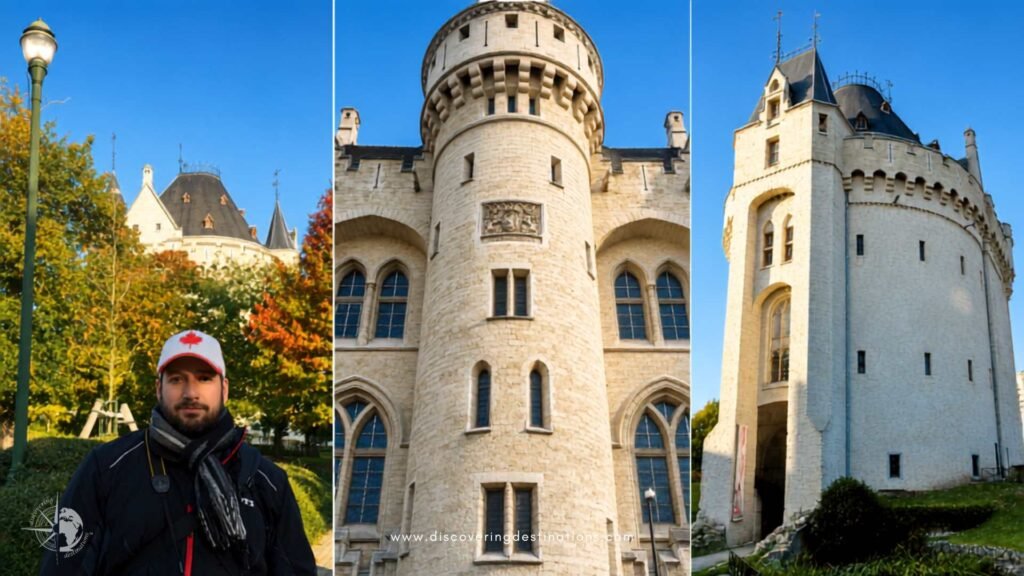
We also stopped to see the Halle Gate, one of the surviving sections of Brussels’ former medieval city walls. From the outside, it looked more compact than we expected, and we decided not to visit the museum inside. Still, its castle-like tower made it an interesting and easy photo stop.
What made this visit especially memorable was exploring the surrounding Saint-Gilles neighbourhood afterward. We found a lively local atmosphere and enjoyed a relaxed happy-hour stop away from the busiest tourist streets.
Stop at a Brussels Flea or Antique Market
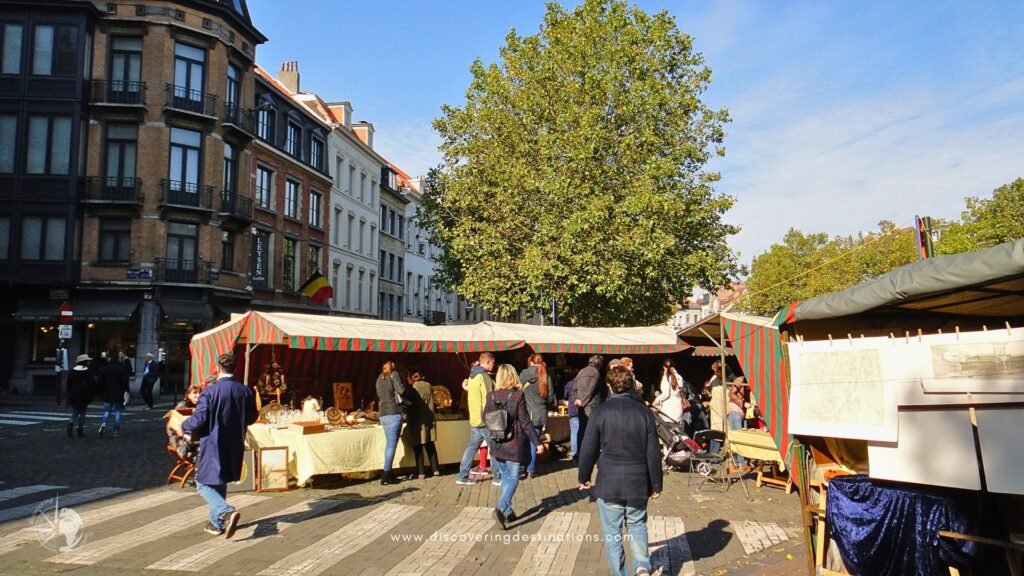
One of the things we enjoyed about Brussels was coming across markets and little events without necessarily planning for them. During our trip, we found a street market filled with antiques, artwork and interesting objects, although after all these years we honestly don’t remember exactly where it was.
If you enjoy this kind of experience, Brussels is a great city for browsing markets. The Grand Sablon Antiques Market currently takes place on weekends, while the famous Place du Jeu de Balle flea market in the Marolles neighbourhood operates regularly and is another good place to browse second-hand finds and curiosities.
Take a Chocolate & Food Walking Tour
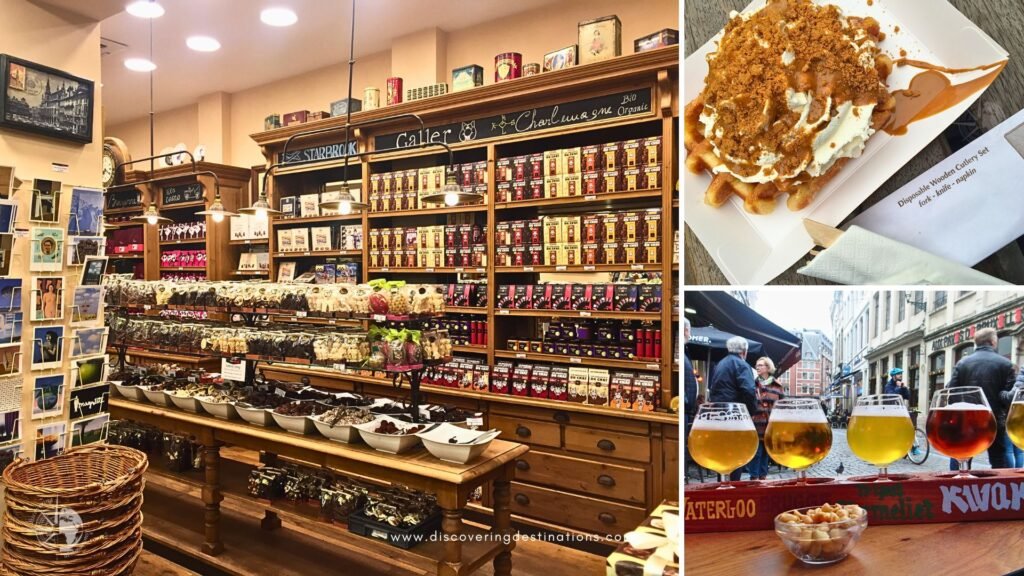
Since food was such a big part of our Brussels experience, a guided food or chocolate tour could be a fun way to combine sightseeing with some of the city’s best-known flavours.
We explored chocolate shops independently during our trip, but today there are guided walking experiences that introduce visitors to different chocolatiers and neighbourhoods while explaining more about Belgian chocolate traditions. Brussels tourism currently lists dedicated chocolate walking tours and workshops as well.
👉 Explore Brussels Chocolate & Food Tours on GetYourGuide
Belgian Comic Art Museum and the Former Marc Sleen Museum, Brussels
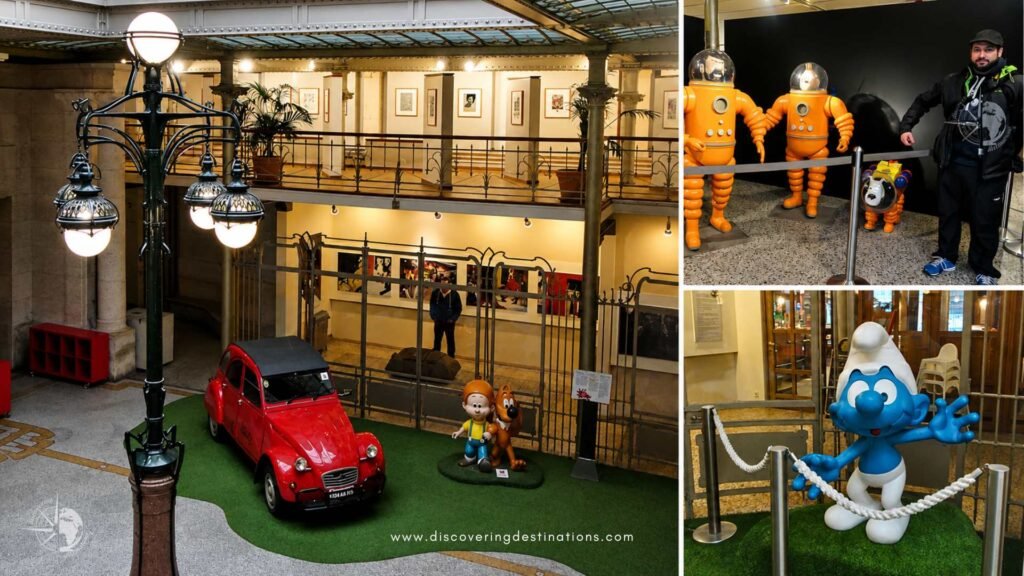
We had lots of fun visiting the Belgian Comic Art Museum, especially because Belgian characters such as Tintin and the Smurfs were already familiar to us. The museum is housed in a beautiful Art Nouveau building designed by Victor Horta, so even visitors who are not serious comic-book fans can enjoy the architecture and creative displays.
During our trip, we also visited the nearby Marc Sleen Museum, which was dedicated to the Belgian artist behind The Adventures of Nero. That museum has since permanently closed as a standalone attraction. Part of its legacy was incorporated into the Belgian Comic Art Museum, while the former building is now known as Marc Sleen House and is occasionally used for temporary creative projects.
Quick update box
Travel update: The Marc Sleen Museum we visited is no longer open as a regular museum. Travellers interested in Belgian comics should visit the Belgian Comic Art Museum and check its current exhibitions before going.
Take a Day Trip to Bruges, Belgium
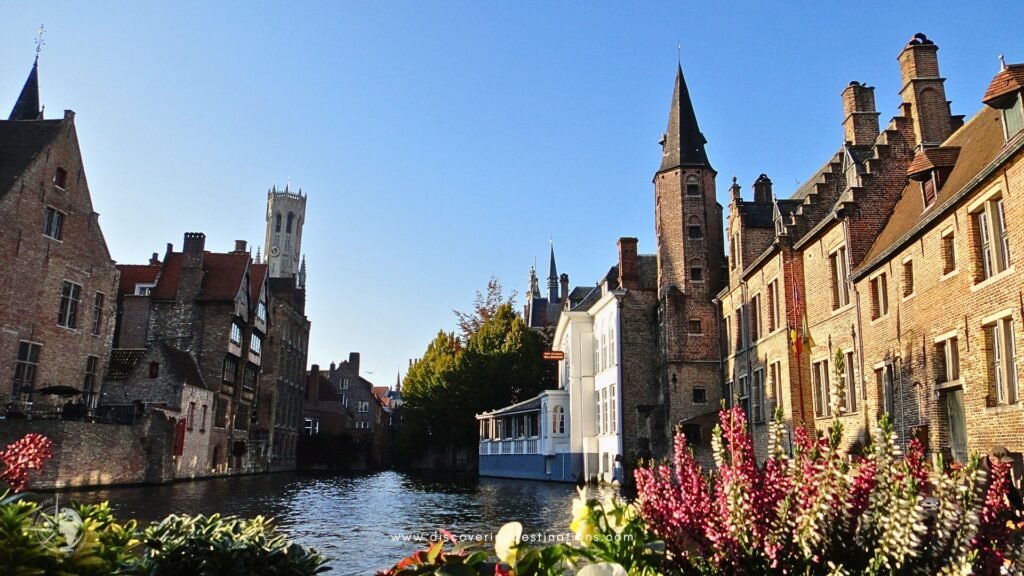
Brussels is also a convenient base for exploring more of Belgium, and Bruges is one of the easiest additions to a Brussels itinerary.
We travelled from Brussels to Bruges during our own 2015 trip and decided to stay overnight. We’re glad we did because even with one full day there, we left wishing we had more time.
If your schedule doesn’t allow an overnight stay, guided day trips from Brussels are another option, with transportation and sightseeing organized for you.
👉 See Bruges day trips from Brussels on GetYourGuide
Our tip: If you have enough time, we would still recommend spending at least one night in Bruges rather than squeezing everything into a few hours. That’s exactly what we did, and even then we wished we had stayed longer.
What to Eat in Brussels, Belgium
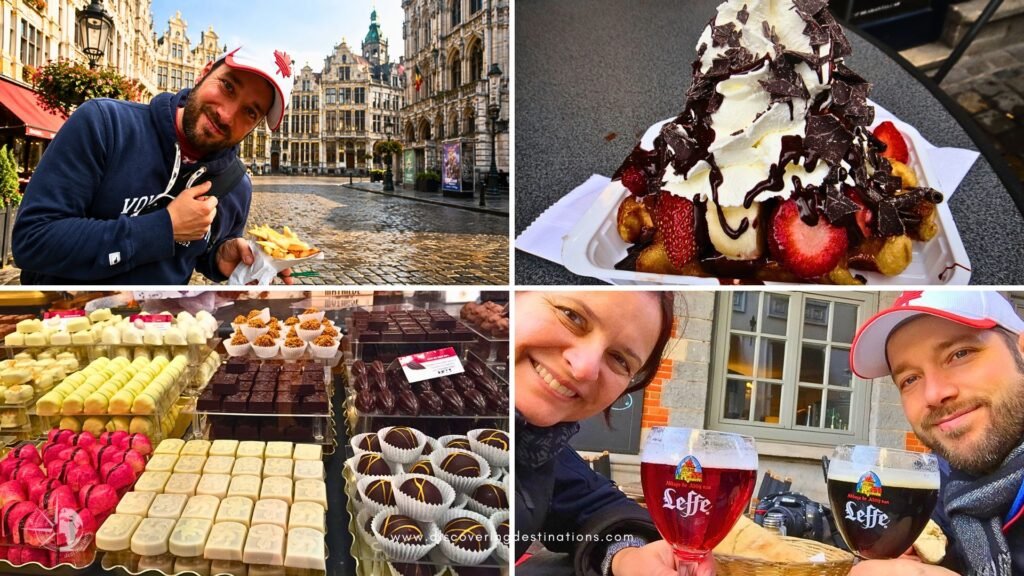
You won’t struggle to find good food in Brussels — from street snacks to traditional Belgian dishes, there are plenty of things worth trying as you explore the city. Rather than focusing on specific restaurants, these are some of the foods and drinks we enjoyed most during our trip.
A few things are definitely worth trying:
- Fries — Belgian fries are a must. Crispy on the outside, soft inside, and perfect as a quick street-food stop while sightseeing.
- Waffles — Easy to find around the historic centre and one of the best sweet breaks during a long day of walking. You can keep them simple or add chocolate, fruit, cream or other toppings.
- Mussels — We also tried the famous Belgian mussels, often served with fries. They are one of the classic dishes to look for in Brussels, and we really enjoyed them.
- Belgian beer — Belgium takes its beer seriously, and Brussels is a fun place to sample different styles. We tried several during our trip, including Leffe and a few tasting flights.
- Chocolate — Leave some time and stomach space for Belgian chocolate. Brussels has everything from famous chocolatiers to smaller specialty shops, especially around the historic centre and Sablon.
- Pastries and biscuits — We stopped at a pastry shop in Sablon and loved it, even though we no longer remember the name. Belgian pastries, praline-filled treats and speculoos-style biscuits are all worth looking out for.
Overall, we found eating in Brussels relatively easy and good value compared with some other major European cities. Some of our favourite food memories came from simple stops along the way rather than carefully planned restaurant reservations.
Getting Around Brussels, Belgium
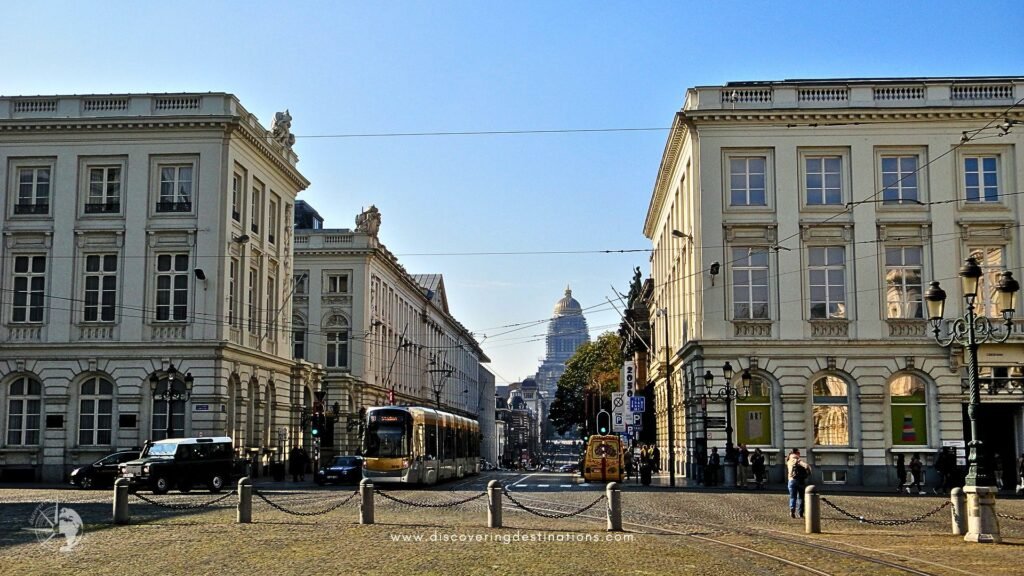
Brussels was fairly easy for us to explore, especially once we combined public transportation with walking. Since we stayed in two different hotels and neither was directly in the heart of the historic centre, we regularly used buses or the metro to get closer to the main attractions and then continued on foot.
Once you reach areas around Grand-Place, Sablon or the city centre, walking is often the best way to explore. Many attractions, cafés, chocolate shops and beautiful streets are relatively close together, and wandering between them was part of the experience for us.
Our Experience with Public Transport in Brussels
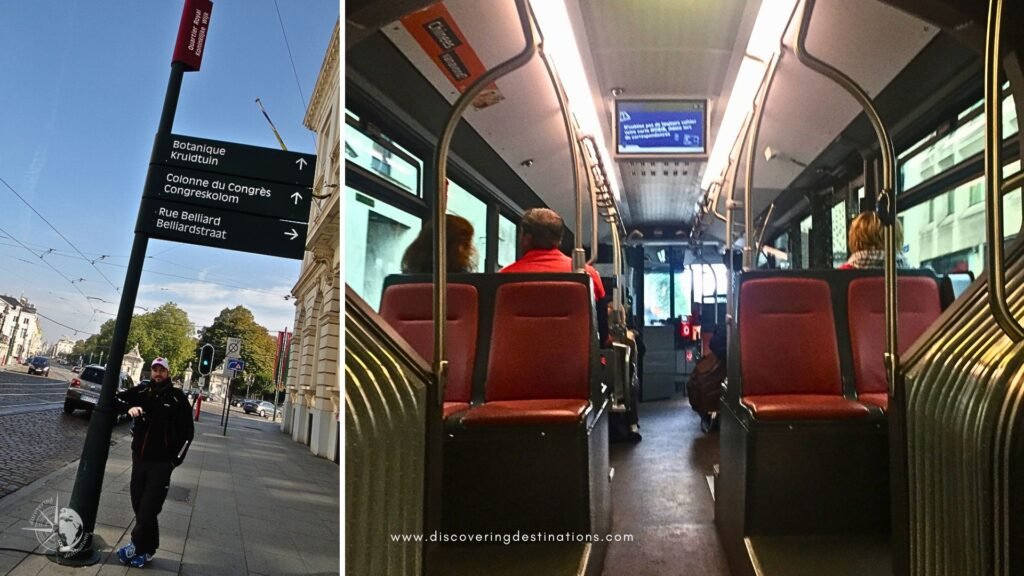
We found the bus system straightforward and reliable. During our stay at FunKey Hotel, for example, we regularly took public transportation into the historic centre rather than walking the entire distance.
The metro took us a little longer to understand at first—the signage was not always intuitive to us back in 2015—but once we figured out the connections, it worked well.
Today, Brussels’ STIB-MIVB network includes metro, tram and bus services, and travellers can also use a contactless bank card, smartphone or smartwatch directly at the validators, which makes things much easier than during our visit.

Easy Ways to Get Around Brussels, Belgium
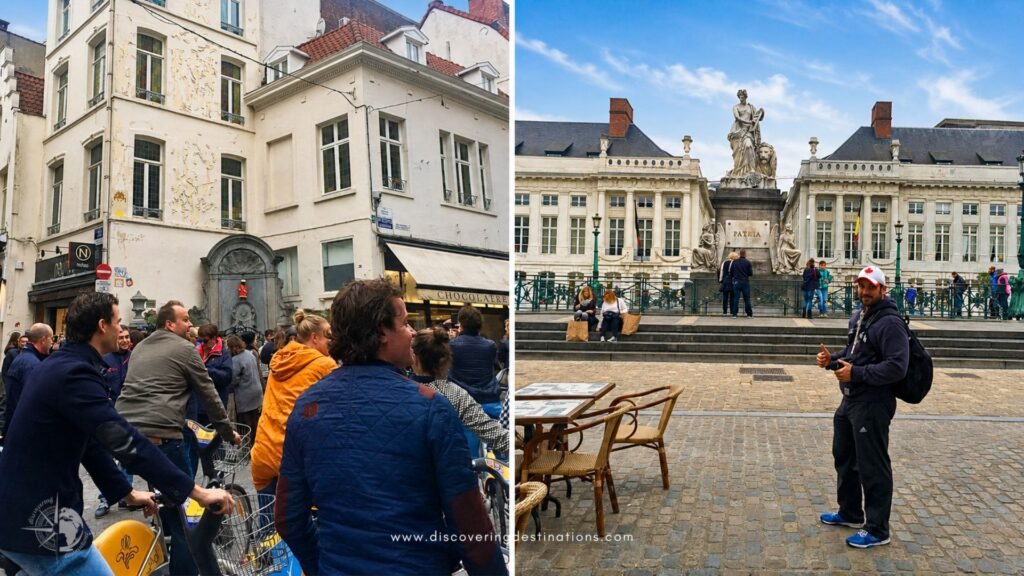
- Walk the historic centre: Our favourite option once we reached the centre. Grand-Place, the Galeries Royales Saint-Hubert, Manneken Pis and many surrounding streets are easy to combine on foot.
- Bus, tram and metro: Especially useful if your hotel is outside the centre or you want to visit areas such as the European Quarter, Cinquantenaire or Saint-Gilles.
- Use contactless payment: Today you can simply tap a compatible bank card or smart device when using STIB-MIVB transportation.
- Use the STIB-MIVB app: It can help plan routes and check public transportation in real time—something that would have made our first metro rides much easier!
- Hop-on hop-off buses: These can still be convenient if you have limited time or prefer not to navigate public transport, although we personally preferred exploring independently.
- Bike Tours: A fun way to discover Brussels beyond the historic centre, especially if you want to cover more ground while still seeing the city at a relaxed pace. Although we did not take a bike tour ourselves, there are several guided options that combine major landmarks with local neighbourhoods. Check Brussels bike tours on GetYourGuide
- Renting a bike: Another option for travellers who prefer exploring independently. Brussels has a growing cycling network, but we personally chose walking and public transport during our visit.
Practical Brussels Travel Tips & FAQ
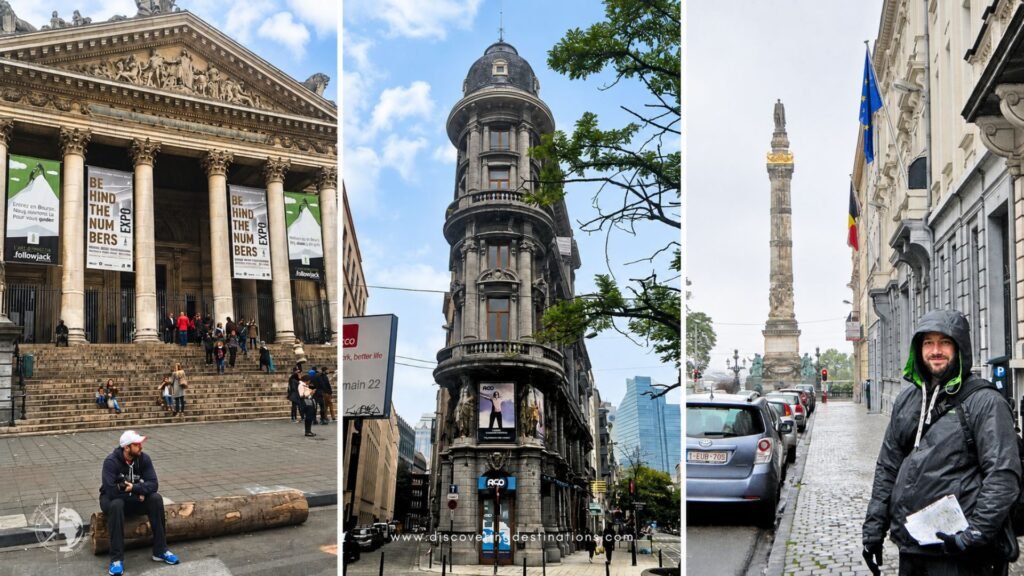
Before wrapping up our Brussels guide, here are a few practical things we learned from our trip, plus some tips that can make exploring the city a little easier.
What currency is used in Brussels?
Belgium uses the euro (€). Cards are widely useful, but we still like having a small amount of cash available for smaller purchases, markets or quick street-food stops.
What languages are spoken in Brussels?
Belgium has three official languages: Dutch, French and German. Brussels itself is officially bilingual in French and Dutch. English is also frequently spoken, particularly in areas visitors are likely to explore.
During our trip, we mainly heard French around central Brussels, and we occasionally met people who could also speak Portuguese or Spanish.
What should you wear for walking around Brussels?
Comfortable walking shoes are one of our biggest recommendations. We explored a lot on foot, and many streets and squares in the historic centre have cobblestones. Shoes with good support and grip will make a long sightseeing day much more comfortable.
Do you need a rain jacket in Brussels?
We visited Brussels in October 2015, when the weather was already a little chilly, and we had one rainy day during our stay. Autumn in Brussels can bring cooler temperatures and showers, so we recommend packing a light rain jacket or waterproof layer, along with clothing you can layer. Brussels tourism also highlights showers and falling temperatures as part of the autumn season.
A compact umbrella can also be useful, but for us a rain jacket is easier when walking around all day.
Is Brussels easy to explore on foot?
For the historic centre, absolutely. We often took public transport closer to the centre and then explored on foot. Areas such as Grand-Place, Sablon, the Galeries Royales Saint-Hubert and Manneken Pis can easily become part of the same walking day.
For places farther out, such as Parc du Cinquantenaire, the European Quarter or Halle Gate, combining walking with the metro, tram or bus makes more sense.
Is Brussels safe for tourists?
As in any busy European capital, we would use normal city precautions—particularly around crowded attractions, stations and public transportation. Belgian Federal Police specifically advises travellers to pay attention to pickpocketing and to keep wallets, phones and bags secure rather than easily accessible.
We wouldn’t make safety sound scary in the blog; something as simple as “keep an eye on your belongings in busy areas and use the same common sense you would in any major city” is enough.
Should you book Brussels attractions in advance?
For major attractions, museums or tours that are important to your itinerary, it is worth checking current opening hours and ticket requirements before your trip. Our visit was in 2015, so prices, schedules and reservation systems mentioned in older travel articles can easily become outdated.
Budget tip: If your dates are flexible, check whether your visit falls on the first Wednesday or first Sunday of the month. Several Brussels museums offer free admission during these periods. For example, the Magritte Museum and other Royal Museums of Fine Arts permanent collections currently offer free admission from 1:00 p.m. on the first Wednesday of the month, while temporary exhibitions are excluded.
Important Note: Free-entry schedules can change, and some offers only apply to permanent collections or specific hours. Before planning your day around one, check the museum’s official website or the Brussels Museums website for the latest information.
Can you take day trips from Brussels?
Absolutely. Brussels is also a convenient base for exploring more of Belgium, and Bruges is one of the easiest and most popular day-trip options.
We actually travelled from Brussels to Bruges during our 2015 trip and stayed overnight. Looking back, we’re glad we did because one day felt a little short for everything we wanted to see. We’ll share that entire experience in our separate Bruges travel guide.
However, if your schedule is limited, there are guided day trips from Brussels that take care of the transportation and planning for you. Some focus entirely on Bruges, while others combine Bruges and Ghent in one full day. Current GetYourGuide options range from roughly 9-hour Bruges trips to approximately 10.5-hour Bruges and Ghent excursions.
👉 See Bruges day trips from Brussels on GetYourGuide
Our tip: If you have enough time, we would still recommend spending at least one night in Bruges rather than squeezing everything into a few hours. That’s exactly what we did, and even then we wished we had stayed longer.
One Last Tip From Our Trip
Don’t try to see Brussels only as a checklist of attractions. Some of our favourite moments came from simply walking through neighbourhoods such as Sablon, stopping for chocolate or pastries, trying Belgian food, and finding a local place for a break along the way.
How can you stay connected in Brussels?
Having mobile data made travelling much easier for us, especially for maps, public transport, restaurant searches and last-minute bookings. We personally use Holafly eSIM when we want the convenience of unlimited data without worrying about roaming charges.
Stay Connected Wherever You Travel
We’ve used Holafly eSIM in Colombia and other destinations around the world, and it gave us reliable coverage with no roaming surprises. It helped us check transport, stay in touch with family, and share our journey as we traveled.
👉 Use our discount code DISCOVERINGDESTINATIONS
Enjoy 5% off any Holafly plan, for any destination, on your next purchase.
Final Thoughts
Brussels gave us a really nice mix of history, architecture, food, local neighbourhoods and easy day-to-day exploring. Looking back at our trip from 2015, some of our favourite memories were not necessarily the biggest attractions, but the simple moments — walking through Sablon, trying Belgian fries and waffles, tasting different beers, exploring the comic museum, and discovering areas outside the historic centre.
If we returned today, we would probably slow down even more, spend extra time in the neighbourhoods we enjoyed, and leave a little more room for cafés, chocolate shops and unplanned stops along the way.
We hope this guide helps you plan your own Brussels trip and gives you a few ideas beyond the usual checklist.
Eli & Serge
Discovering Destinations
Discovering Destinations: Travel Tools & Planning Tips
Over the years, we’ve learned that a little planning can make a big difference — especially when it comes to comparing hotels, finding good transportation options, staying connected and booking activities that fit the way you like to travel.
We usually compare several options before booking and use the travel tools that have worked well for us on our own trips.
From hotels and flights to eSIMs, tours and activities, you can see the platforms and travel resources we currently use below.

Eli & Serge from Discovering Destinations
Discovering Destinations: Travel Tools & Planning Tips
Traveling is exciting—but a well-planned trip can make the experience smoother and more affordable. We’ve learned through years of travel that starting early helps you find the best deals, avoid stress, and make the most of your time.
Use trusted tools to compare prices, read real traveler reviews, and book with confidence. From flights and hotels to eSIMs and local tours, these platforms have helped us—and now they can help you too.